

Introduction
Materials and Methods
Plant Materials
Measurement of Stomatal and Agronomic Traits
Statistical Analysis
Results and Discussion
Comparison of the Distribution of Stomatal Traits between Adaxial and Abaxial Sides
Correlation and Principal Component Analysis between Stomatal and Agronomic Traits
Introduction
The global frequency and severity of drought events are likely to increase because of climate change (IPCC, 2013). Climate variability affects the genotypic potential and selection of genotypes with increased production under water stress conditions of the field. Crop growth and development depend on integrated responses of various eco-physiological processes considering multiple environmental conditions such as temperature, nutrients, and water. Through selection and incorporation of physiological traits, traditional breeding develops cultivars for water-limited environments (Rauf et al., 2007).
Drought stress limits wheat yields by preventing crop plants from expressing their full genetic potential. Drought tolerance is defined as the ability of a plant to live, grow, and reproduce satisfactorily with limited water supply or under periodic conditions of water deficit (Farooq et al., 2009). Research in the molecular aspects of drought tolerance has tended to improve the survival ability of plants at the expense of yield. Drought limits wheat yields by preventing crop plants from expressing their full genetic potential (Baloch et al., 2013). A way to improve the drought tolerance of crops is to discover new genes and alleles that allow plants to continue to grow and maintain or increase grain yield under water-limited growing conditions (Shahinnia et al., 2016). Hence, because of the opposite relationship between physiological factors, selection of drought tolerant plants is not accomplished. Several factors are considered as drought tolerance factors, photosynthesis late, chlorophyll contents, stomatal density, dimensions of leaf surface, and stomatal conductance (Dunn et al., 2019; Ouyang et al., 2017; Verma et al., 2020; Xu and Zhou, 2008).
Morphological traits of leaves have a relationship with key environmental factors such as light, water status, and CO2 levels. Stomatal density, distribution, and epidermal features affect environmental factors by gas exchange and water potential (Xu and Zhou, 2008). During a water deficit situation, stomata close and upregulate water use efficiency (Bi et al., 2017). Although the total stomatal pore area is 5% of the leaf surface, transpiration water loss through the stomatal pores contributes to 70% of the total water use of plants (Hetherington and Woodward, 2003). Therefore, one of the important points in wheat breeding to increase drought tolerance is the control of stomatal distribution and size of the stomata under abiotic stress (Cattivelli et al., 2008). Mutated Arabidopsis with low stomatal density and large stomata, showed reduced transpiration rate and improved growth rate under water-limited conditions (Pillitteri and Torii, 2012). Stomatal traits are considered an important factor in growth rate and water control ability in plants. The purpose of this study is to evaluate the stomatal and leaf traits of flag leaves between Korean wheat cultivars.
Materials and Methods
Plant Materials
Wheat cultivars were grown on the upland field of the National Institute of Crop Science in Wanju-Gun, Korea in 2021 (RDA, 2012). Among the 35 Korean wheat cultivars (Table 1), most cultivars are for noodles (26 cultivars), 4 cultivars are for cookies, 3 cultivars are for bread, and 2 cultivars are for waxy. Also, the grain hardness of 18 cultivars is hard, that of 14 cultivars is soft, that of 2 cultivars is waxy, and that of 1 cultivar is medium. In vernalization, 20 cultivars show III type, 9 cultivars show II type, 5 cultivars show IV type, and 1 cultivar shows I type. The 35 Korean wheat cultivars were used to observe and evaluate stomatal characteristics and agronomic traits.
Table 1.
Thirty five Korean wheat cultivars
| Cultivar | End-use | Hardness | Vernalizationz | Variety registration |
| Ol-mil | Noodles | Soft | III | 1976 |
| Anbaek-mil | Noodles | Hard | IV | 2002 |
| Jojoong-mil | Noodles | Hard | II | 2014 |
| Tapdong-mil | Noodles | Hard | IV | 1997 |
| Hojoong-mil | Noodles | Soft | IV | 2012 |
| Dahong-mil | Noodles | Soft | III | 1997 |
| Eunpa-mil | Noodles | Hard | III | 1997 |
| Cheongge-mil | Cookies | Soft | III | 1997 |
| Sinmichal-mil | Waxy | Waxy | III | 2003 |
| Alchan-mil | Noodles | Hard | III | 1997 |
| Sugang-mil | Noodles | Hard | III | 2008 |
| Saeol-mil | Noodles | Soft | II | 1997 |
| Geuru-mil | Noodles | Hard | IV | 1997 |
| Uri-mil | Cookies | Soft | III | 1997 |
| Jeokjoong-mil | Noodles | Hard | II | 2008 |
| Joah-mil | Cookies | Soft | II | 2012 |
| Baegjoong-mil | Noodles | Soft | II | 2008 |
| Olgeuru-mil | Noodles | Soft | III | 1997 |
| Gobun-mil | Noodles | Medium | III | 1997 |
| Goso-mil | Cookies | Soft | II | 2011 |
| Hwanggeumal-mil | Bread | Hard | I | 2020 |
| Namhae-mil | Noodles | Soft | III | 1997 |
| Younbaek-mil | Noodles | Hard | III | 2006 |
| Baekkang-mil | Bread | Hard | II | 2015 |
| Jokyoung-mil | Bread | Hard | II | 2005 |
| Saekeumkang-mil | Noodles | Soft | III | 2015 |
| Jonong-mil | Noodles | Soft | III | 2004 |
| Sooan-mil | Noodles | Hard | III | 2010 |
| Johan-mil | Noodles | Soft | III | 2016 |
| Jopoom-mil | Noodles | Hard | III | 2002 |
| Dajung-mil | Noodles | Hard | III | 2011 |
| Baekchal-mil | Waxy | Waxy | IV | 2012 |
| Joeun-mil | Noodles | Hard | III | 2001 |
| Dabun-mil | Noodles | Hard | II | 2007 |
| Keumkang-mil | Noodles | Hard | III | 1997 |
Measurement of Stomatal and Agronomic Traits
Flag leaves on the main tiller of six plants (three plants for the adaxial side and three plants for the abaxial side) per cultivar that expanded and exposed to the sun were collected at mid-day during sunny clear days to obtain measurements in steady-state conditions. A nail polisher was applied on the adaxial and abaxial side of flag leaves and dried for three minutes. Adhesive tape was applied again to make imprints on the leaves, the thin imprints (an area approximately 25 ㎜ × 17 ㎜) were peeled off from the leaf surface and immediately mounted on a glass slide (75 ㎜ × 25 ㎜). Images of the stomata were observed using a phase-contrast microscope with a color camera (BX53F2 with DP-22, Olympus, Japan). After focusing, three pictures of each adaxial and abaxial surface of cultivars were taken at 100 times magnification for the count number of stomata. Microscopes were refocused, and ten pictures of stomata on each side of leaves were taken at 400 times magnification for analysis of stomatal traits such as stomatal density (SD), aperture length (APL) and width (APW), and guard cell length (GCL) and width (GCW). Agronomic traits were evaluated based on the standard of research and analysis for agricultural technology (RDA, 2012). Culm length (CL) was evaluated as the length from the ground surface to the neck of the panicle, and spike length (SL) was evaluated as the length from the neck of the panicle to the ear tip. Grain number per panicle (GNP) was counted as kernel number from one spike. Thousand-grain weight (TGW) was measured weight of 1,000 grains.
Statistical Analysis
Among 35 Korean wheat, distribution of SD, APL, APW, GCL, and GCW were revealed by a skeletal box of the univariate distribution function, and the correlation between the stomatal traits and the agronomic traits was presented by correlation and scatter plot matrix with density ellipse and histograms function. Principal component analysis was performed by correlation monoplot of biplot/monoplot function. All data had repetition, i.e., stomatal density (n = 3), aperture length and width (n = 10), and guard cell length and width (n = 10). Analyse-it® for Microsoft® Excel as a statistic program was used for those functions (https://analyse-it.com).
Results and Discussion
Comparison of the Distribution of Stomatal Traits between Adaxial and Abaxial Sides
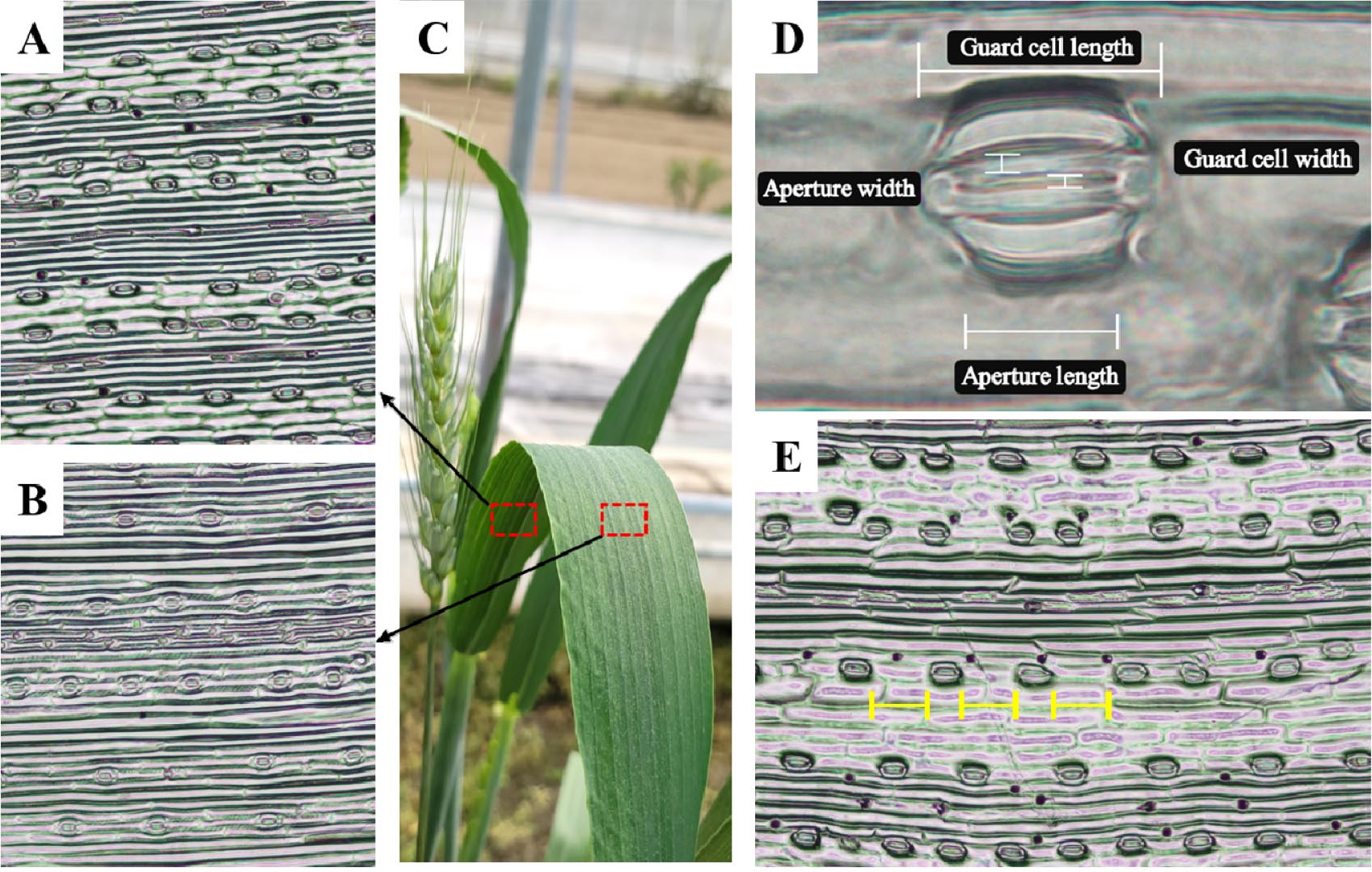
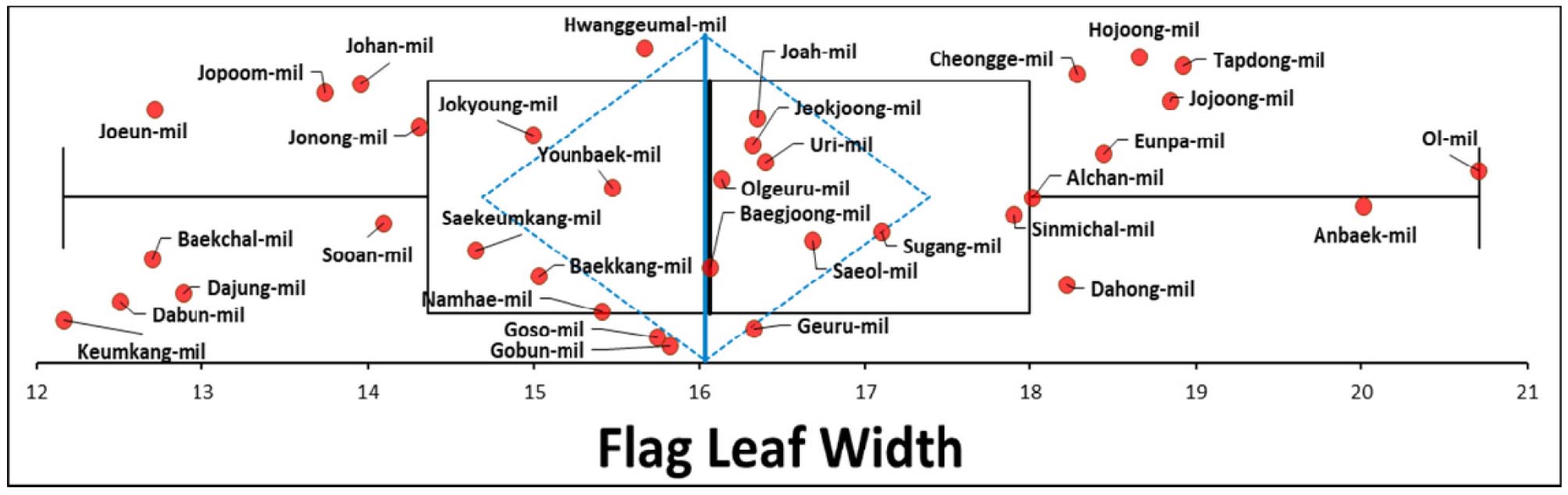
The cultural environment of Korean wheat is different from it of wheat cultivated in other countries, i.e. in South Korea, wheat is harvested before rice transplantation in double-cropping because rice is main. Therefore, Korean wheat cultivars is harboring short maturation. In recently, the effect of pre-cropping with various crops on quality of wheat flour on paddy field is studied (Oh et al., 2022). This study was to evaluate stomatal traits and identify correlation with agronomic traits in Korean wheat cultivars, and we provided the basic information of stomatal traits of Korean wheat cultivars to respond to change of cultural environment in the near future. Hence, stomatal traits of flag leaves of Korean wheat cultivars were observed and measured as SD, stomata structure such as APL, APW, GCL, and GCW (Fig. 1). Flag leaves are one of the yield-determining factors for crops and contribute yield potential under especially drought, and flag leaf area affects ear number and grain yield potential (Biswal and Kohli, 2013; Monyo and Whittington, 1973; Verma et al., 2004; Zeuli and Qualset, 1990). In addition, stomatal shape and frequency are different in different plants (Naeem et al., 2019). In this study, Suan-mil showed stomata structure with the round type, while Jonong-mil shoed stomata structure with the oval type. Also, the number of stomata was different between Tapdong-mil and Anbeak-mil on the same area. Flag leaf width (FLW) of Korean wheat cultivars was measured to identify a relationship between size and arrangement of stomata and compared between each Korean cultivar (Fig. 2). The mean FLW was 16.04 ± 2.21 ㎜, and the median FLW was 16.07. Baegjoong-mil showed 16.07 ㎜ of FLW. On the box plot, 9 cultivars under Q1 were Jonong-, Sooan-, Johan-, Jopoom-, Joeun-, Baekchal-, Dajung-, Dabun-, and Keumkang-mil. Among them, there were 7 hard wheat cultivars and 2 soft wheat cultivars, and there were 7 cultivars with III type, 1 cultivar with II type, and 1 cultivar with IV type. Over Q3 of the box plot, there were 9 cultivars, Ol-, Anbeak-, Tapdong-, Jojoong-, Enpa-, Alchan-, Sinmichal-, Dahong-, and Cheongge-mil. Among them, there were 5 hard wheat cultivars and 4 soft wheat cultivars. In the vernalization type, there were 5 cultivars in III type, 2 cultivars in II type, and 2 cultivars in IV type. Ol-mil showed the widest FLW, while Keumkang-mil showed the narrowest among 35 Korean wheat cultivars.
Stomatal size and density are strongly related to CO2 and water availability (Doheny-Adams et al., 2012). Stomata pores cover only around 5% of the leaf area but contribute to around 70% of water loss by plants (Bertolino et al., 2019). Wheat with reduced stomata density showed better water-use efficiency but showed worse stomatal conductance (Dunn et al., 2019). Under stress condition of water, stomatal size is reduced in Arabidopsis, but stomatal density was not changed (Doheny-Adams et al., 2012). Correlation between drought tolerance and stomatal traits such as SD and stomata size of wheat can be indicator of tolerance. These studies mean that stomata architecture is important for plant growth (Zheng et al., 2013).
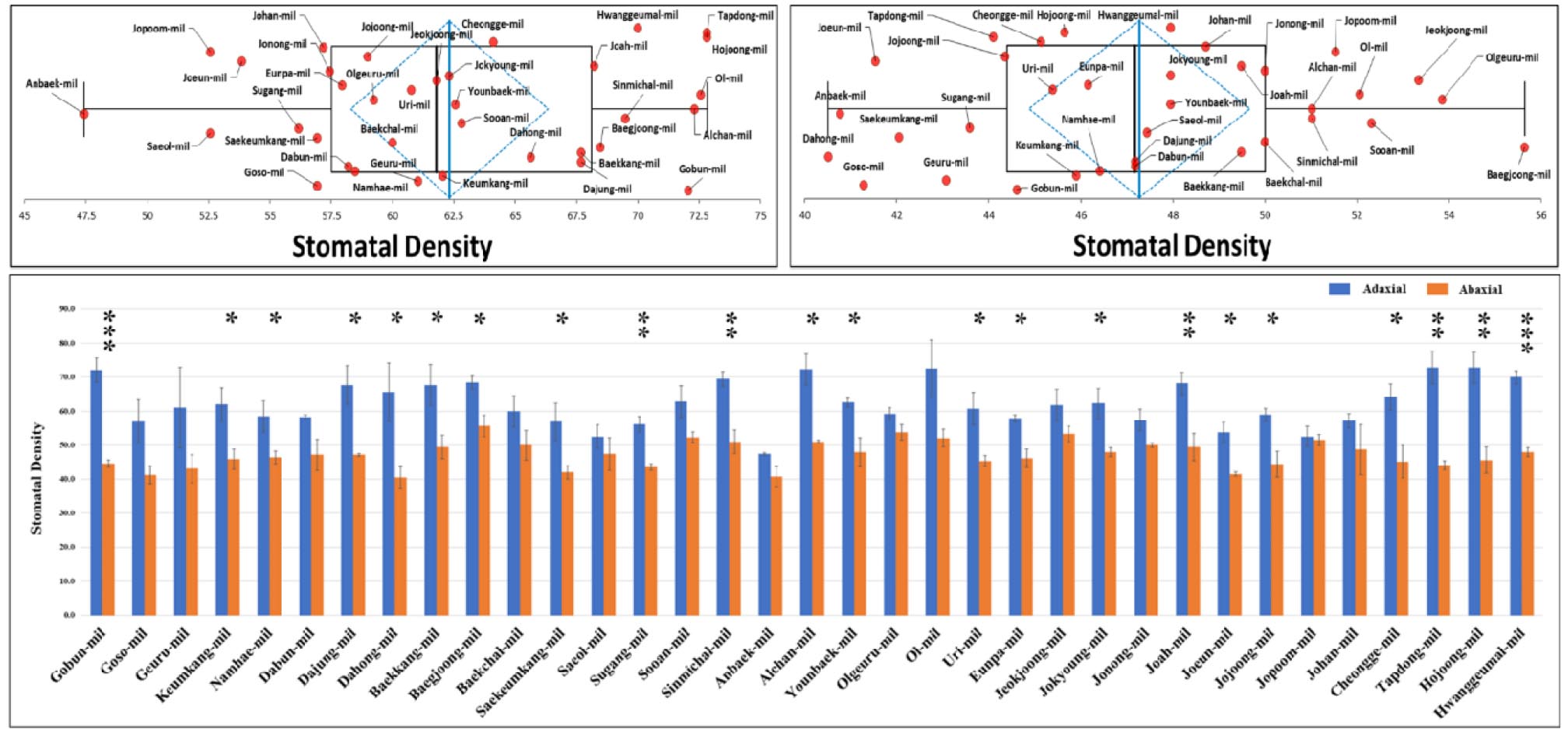
Korean wheat cultivars showed different distribution in the SD of adaxial and abaxial sides (Fig. 3). Among 35 Korean wheat cultivars, the SD of the adaxial side was identified that Tapdong- and Hojoong-mil was the highest, and Anbeak-mil was the lowest. Jokyoung-mil showed average SD, and Jeokjoong-mil showed the median stomatal density among Korean wheat cultivars (left of the top in Fig. 3). On the other hand, on the abaxial side (right of the top in Fig. 3), Beagjoon-mil showed the highest stomatal density, and Dahong-mil showed the lowest stomatal density. Dajung- and Dabun-mil with the median SD showed the SD near the average SD. Between Q1 and Q3, there were 13 Korean wheat cultivars regardless of adaxial and abaxial sides, i.e. Eunpa-, Jonong-, Dabun-, Namhae-, Jojoong-, Baekchal-, Cheongge-, Jokyoung-, Younbaek-, Keumkang-, Baekkang-, and Dajung-mil. Olgeuru-mil showed SD between Q1 and Q3 on the adaxial side but high SD on the abaxial side. Geuru-mil showed SD between Q1 and Q3 on the adaxial side but low SD on the abaxial side. Jeokjoong-mil showed stomatal density between Q1 and Q3 on the adaxial side but high SD like Olgeuru-mil on the abaxial side. Dahong-mil showed stomatal density between Q1 and Q3 on the adaxial side but the lowest stomatal density on the abaxial side. Among 35 Korean wheat cultivars, 22 Korean wheat cultivars showed a significant difference in SD between the adaxial and abaxial sides of flag leaves (bottom in Fig. 3). Stomatal density is fundamentally higher on adaxial side than on abaxial side (Teare et al., 1971). Also, stomatal density according to leaf side is no relation with cultural environment i.e. field versus greenhouse (Kazemi et al., 1978). This study showed the same result that the SD of the adaxial side is higher than the SD of the abaxial side on average although some Korean wheat cultivars showed significantly no different between SD on adaxial side and SD on abaxial side.
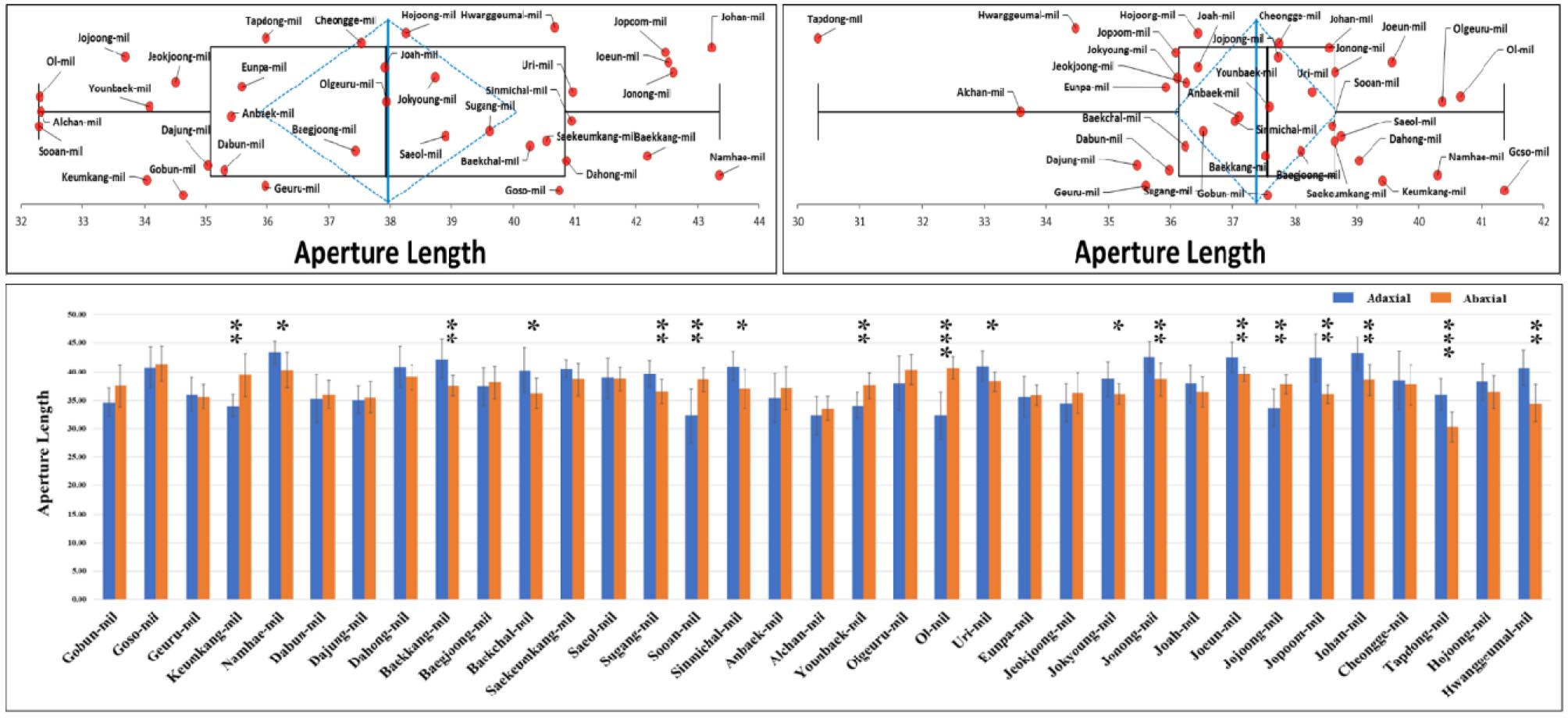
The distribution of APL on the adaxial side showed a wide range compared to the that on abaxial side. On the adaxial side (left of the top in Fig. 4), the difference between Q1 and Q3 was 5.77 ㎛. On the other hand, the difference between Q1 and Q3 was 2.51 ㎛ on the abaxial side. On the adaxial side, Namhae- and Johan-mil showed the longest aperture length among 35 Korean wheat cultivars, while Ol-, Alchan-, and Sooan-mil showed the shortest APL among them. On adaxial side showed the mean APL (37.967 ㎛) and median APL (37.940 ㎛) among 35 Korean wheat cultivars. On the abaxial side (right of the top in Fig. 4), Goso-mil showed the longest APL while Tapdong-mil showed the shortest APL. Especially Tapdong-mil showed a seriously big difference in APL compared to the other Korean wheat cultivars. Between Q1 and Q3, there were Anbeak-, Baegjoong-, Cheongge-, Hojoong-, Jokyoung-, Sugang-, Baekchal-, and Saekeumkang-mil on adaxial and abaxial both sides. Among 35 Korean wheat cultivars, 18 Korean wheat cultivars showed a significant difference in APL between the adaxial and abaxial side of flag leaves (bottom in Fig. 4). Keumkang-, Sooan-, Younbaek-, Ol-, and Jojoong-mil showed longer APL of abaxial side than that of adaxial side. The other Korean wheat cultivars showed a longer APL on the adaxial side than that of the abaxial side.
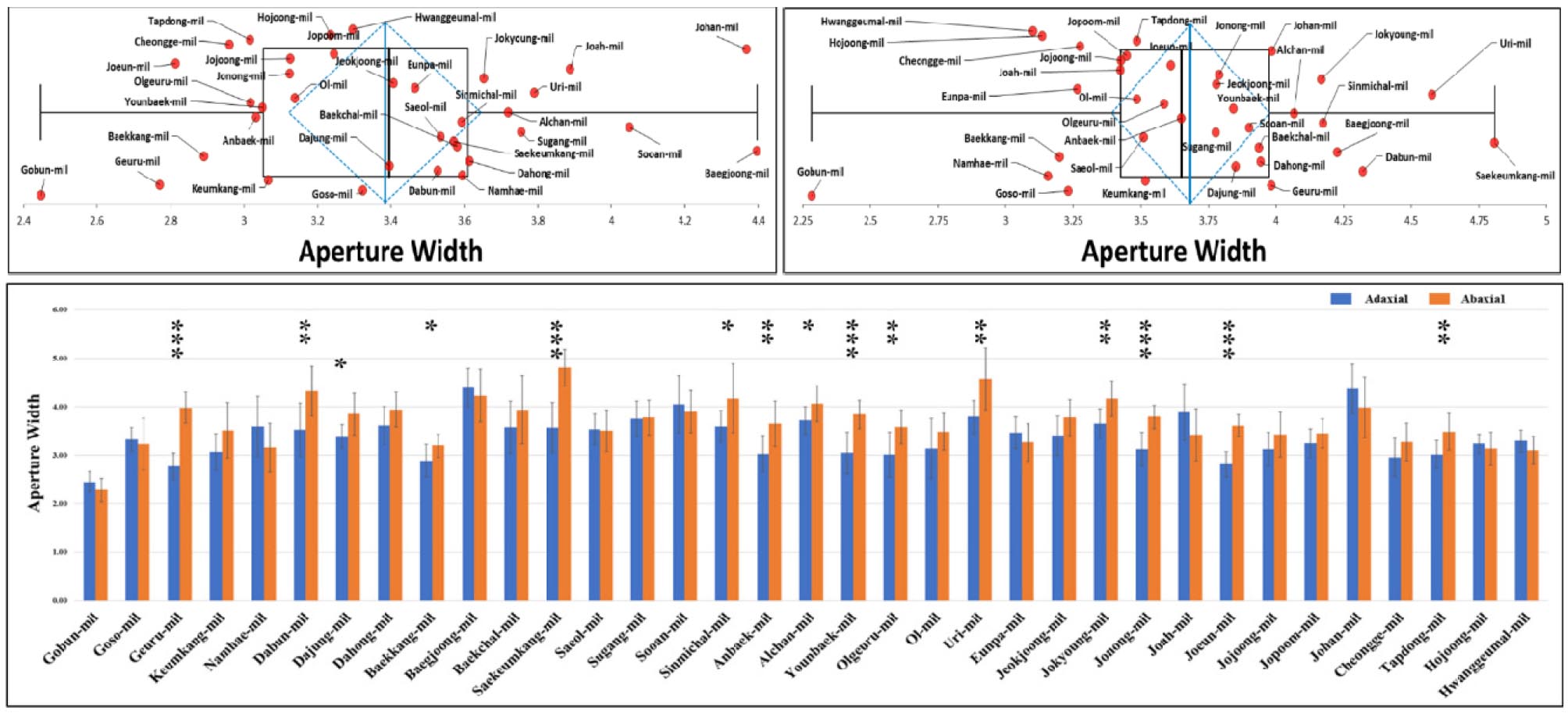
The ranges of APW were approximately from 2.4 to 4.4 on the adaxial side and 2.3 to 4.8 on the abaxial side. On the adaxial side (left of the top in Fig. 5), Baegjoon- and Johan-mil showed the widest APW, while Gobun-mil showed the narrowest APW. On the abaxial side (right of the top in Fig. 5), Saekeumkang-mil showed the widest APW, while Gobun-mil showed the narrowest APW. On the adaxial and abaxial sides, Gobun-mil showed the narrowest APW and was no significant difference in APW on both sides. Also, Gobun-mil showed certain different APW on the abaxial side. Between Q1 and Q3, there were Keumkang-, Younbaek-, Jojoong-, Jonong-, Ol-, Dajung-, Baekchal-, Jeokjoong-, Saekeumkang-, Dajong-mil on adaxial and abaxial both sides. Among 35 Korean wheat cultivars, 15 Korean wheat cultivars showed a significant difference in aperture width between the adaxial and abaxial sides of flag leaves (bottom in Fig. 5). The 15 Korean wheat cultivars showed wider aperture width of the abaxial side than that of adaxial side.
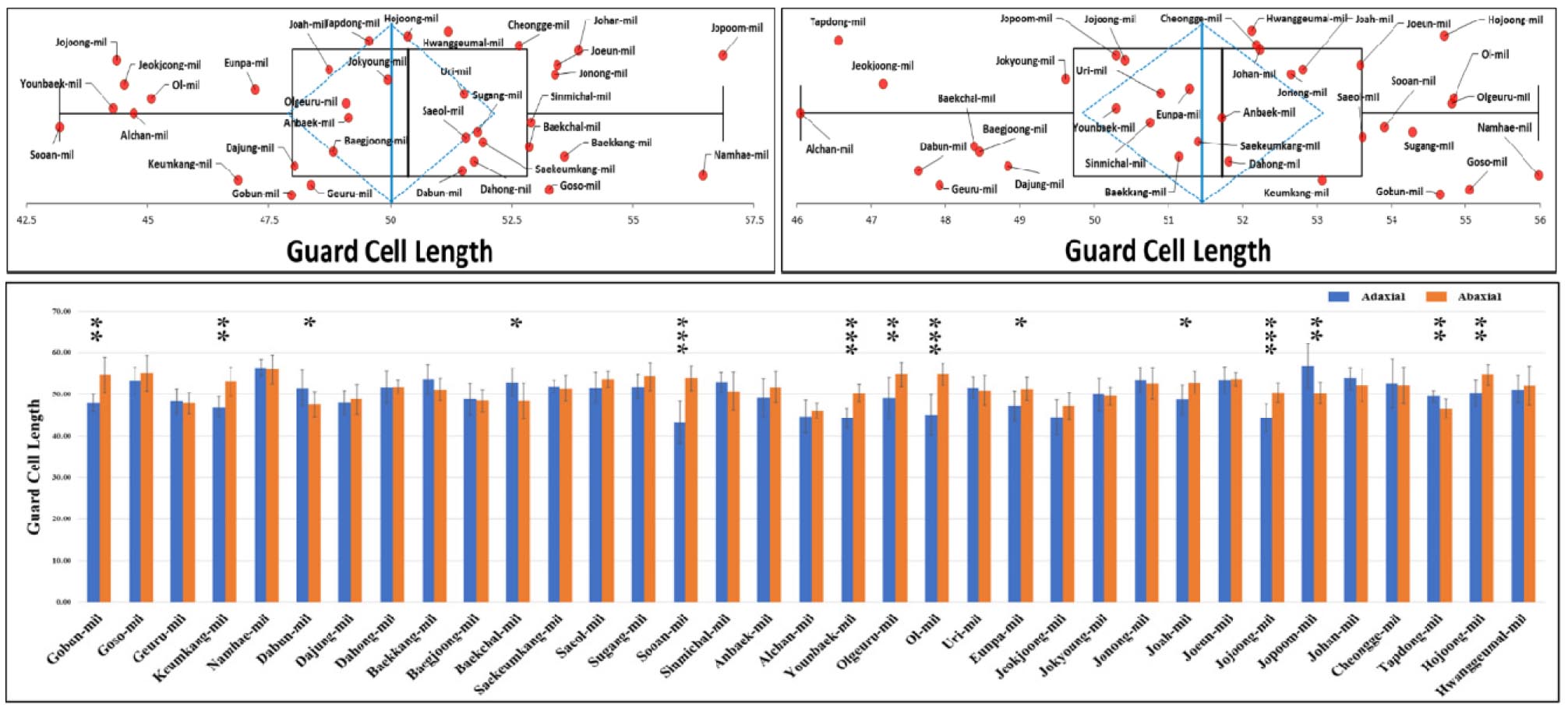
The mean GCL on adaxial and abaxial sides was higher than the median of GCL. The range of distribution of GCL on the adaxial side was wider than that of the abaxial side. On the adaxial side (left of the top in Fig. 6), Jopoon- and Namhae-mil showed longer GCL than the other Korean wheat cultivars, while Sooan-mil showed the shortest GCL than the others. On the abaxial side (right of the top in Fig. 6), Namhae-mil showed the longest GCL among the other Korean wheat cultivars, while Alchan-mil showed the shortest GCL than the others. Between Q1 and Q3, there were Anbeak-, Joah-, Hwanggeumal-, Cheongge-, Uri-, Saeol-, Saekeumkang-, and Dahong-mil on the adaxial and abaxial sides. Among 35 Korean wheat cultivars, 14 Korean wheat cultivars showed a significant difference of GCL between the adaxial and abaxial sides of flag leaves (bottom in Fig. 6). Dabun-, Backchal-, Jopoom-, and Tapdong-mil showed longer GCL of adaxial side than that of abaxial side. The other 10 Korean wheat cultivars showed shorter GCL on the adaxial side than that of the abaxial side.
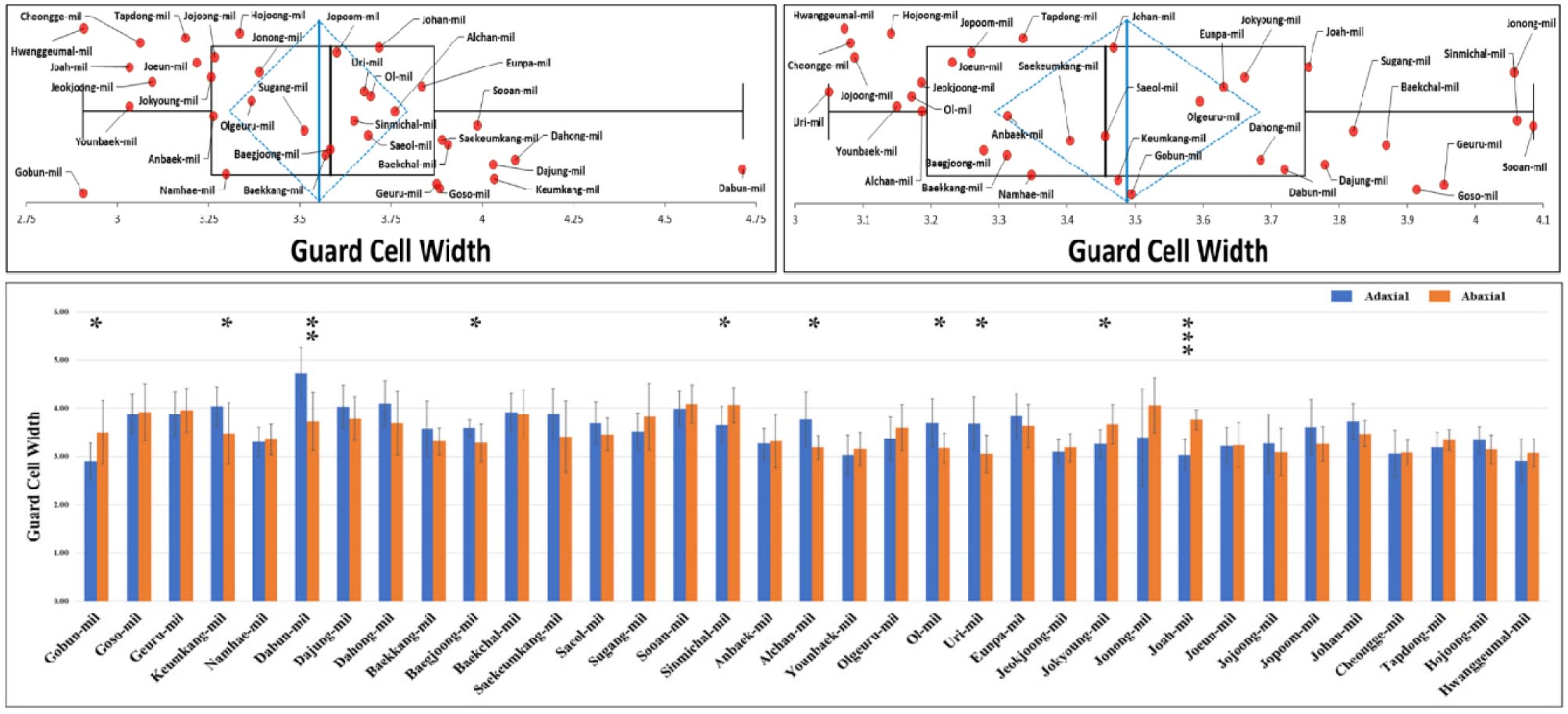
The distribution of GCW showed a similar range between Q1 and Q3 of the adaxial side (Q1, 3.259 ㎛; Q3, 3.868 ㎛ in left of Fig. 7) and abaxial side (Q1, 3.194 ㎛; Q3, 3.749 ㎛ in right of Fig. 7). On the adaxial side (left of the top in Fig. 7), Dabun-mil showed the highest GCW, while Gobun- and Cheongge-mil showed the lowest guard cell width among the 35 Korean wheat cultivars. Also, Dabun-mil showed a prominent difference in GCW of the adaxial side compared to the other Korean wheat cultivars. On the abaxial side (right of the top in Fig. 7), Sooan-mil showed the highest GCW, while Uri-mil showed the lowest guard cell width among the 35 Korean wheat cultivars. Between Q1 and Q3 on adaxial and abaxial sides, there were Jopoom-, Baegjoong-, Baekkang-, Anbaek-, Namhae-, Johan-, Saeol-, Olgeuru-, and Eunpa-mil. Among the 35 Korean wheat cultivars, 10 Korean wheat cultivars showed significantly different GCW between adaxial and abaxial sides, i.e. Gobun-, Keumkang-, Dabun-, Baegjoong-, Sinmichal-, Alchan-, Ol-, Uri-, Jokyoung-, and Joah-mil. Gobun-, Sinmichal-, Jokyoung-, and Joah-mil showed wider GCW on the abaxial side than that of adaxial sides.
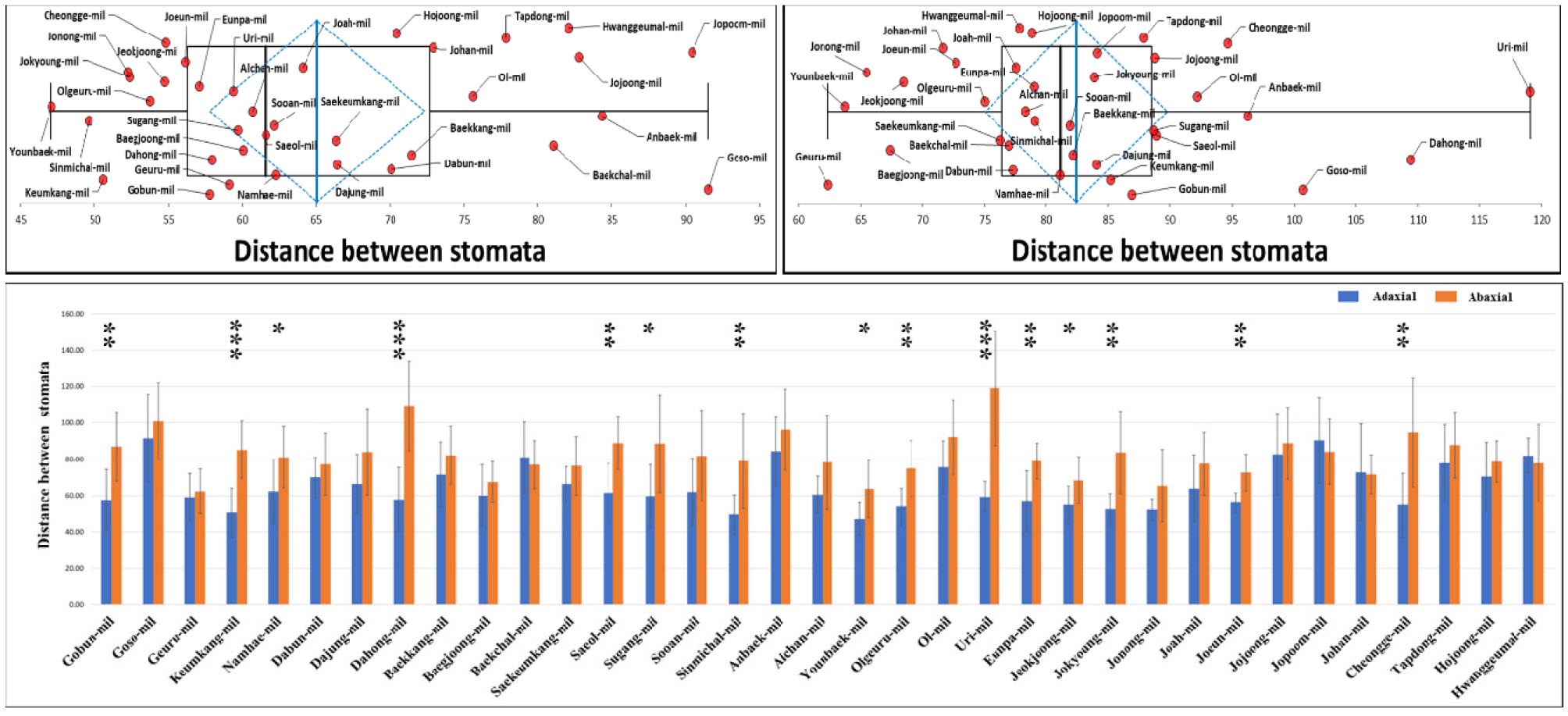
The DIS showed a different range between Q1 and Q3 of the adaxial side (Q1, 56.310 ㎛; Q3, 72.648 ㎛ in left of Fig. 8) and abaxial side (Q1, 76.446 ㎛; Q3, 88.504 ㎛ in right of Fig. 8). On the adaxial side (left of the top in Fig. 8), Goso-mil showed the longest distance, while Younbaek-mil showed the shortest distance among 35 Korean wheat cultivars. Under the average distance, 21 Korean wheat cultivars were distributed between 47.072 and 65.044 ㎛, while 14 Korean wheat cultivars were distributed over the average of distance (between 65.044 and 91.536 ㎛). On the abaxial side (right of the top in Fig. 8), Uri-mil showed the longest distance, while Geuru-mil showed the shortest distance. The DIS of Uri-mil was exceptionally long. Between Q1 and Q3 on adaxial and abaxial both sides, there were Eunpa-, Gobun-, Sugang-, Alchan-, Sooan-, Namhae-, Dajung-, Dabun-, and Baekkang-mil. The DIS was different between adaxial and abaxial sides of Gobun-, Keumkang-, Namhae-, Dahong-, Saeol-, Sugang-, Sinmichal-, Younbaek-, Olgeuru-, Uri-, Eunpa-. Jeokjoong-, Jokyoung-, Joeun-, and Cheongge-mil. Among the 15 Korean wheat cultivars showed the different distance between the adaxial and abaxial sides, all cultivars showed a longer distance on the abaxial side than that of the adaxial side. Stomata related to evaluation of stomatal traits according to environment change were studied in Korean (Jung et al., 2014; Yoon, 1999). In this study, these results related to evaluation of stomata traits of Korean wheat cultivars can be used to study on drought and heat stresses response to climate change.
Correlation and Principal Component Analysis between Stomatal and Agronomic Traits
Flag leaf area is related to ear number and grain yield potential (Monyo and Whittington, 1973). Among 35 Korean wheat cultivars, correlations between stomatal and agronomic traits of the adaxial side showed in Fig. 9. Flag leaf with is negative correlation with plant height and positive correlation with kernel number per spike (Liu et al., 2018). In this study, we identified that FLW shows the negative correlation with CL (r = -0.349*) and the positive correlation with GNP (r = 0.480**) among Korean wheat cultivars. Also, FLW was not significantly correlation with TGW and tended to negative correlation with it (r = -0.120). This result was the same result of Liu et al. (2018). SD showed negative correlation with GCL (r = -0.340*), while APL showed highly positive correlation with GLC (r = 0.916***). DIS showed negative correlation with TN (r = -0.371*), and TN showed negative correlation with TGW (r = -0.457**). The correlation of the abaxial side showed in Fig. 10. FLW showed a negative correlation with CL and a positive correlation with GNP like the correlation of FLW of the adaxial side. In abaxial side, FLW showed additionally positive correlation with DIS (r = 0.346*). SD showed negative correlation with APL (r = -0.429**). APL showed highly positive correlation with GCL (r = 0.714***), while APW showed negative correlation with GCL (r = -0.484**). DIS showed positive correlation with GNP (r = 0.367*), and SL showed also positive correlation with GNP (r = 0.372*). TN showed negative correlation with TGW (r = -0.457**). SD and stomatal traits such as GCL, GCW, APL, and APW show no correlation with yield in wheat and barley (Rahim et al., 2021; Shahinnia et al., 2016). In this study, Korean cultivars also showed the same results. SD showed no correlation with GNP and TGW related to yield. However, DIS showed negative correlation with TN in adaxial side but positive correlation with GNP in abaxial side. It can be explained that distance between each stoma is a more important trait than stomatal traits such as APL, APW, GCL, and GCW for yield potential. However, DIS showed correlation with FLW in only abaxial side. Also, DIS showed no correlation with SD in adaxial and abaxial sides. Hence, it is necessary to study which side of a flag leaf is more related to yield and a number of veins of a flag leaf.
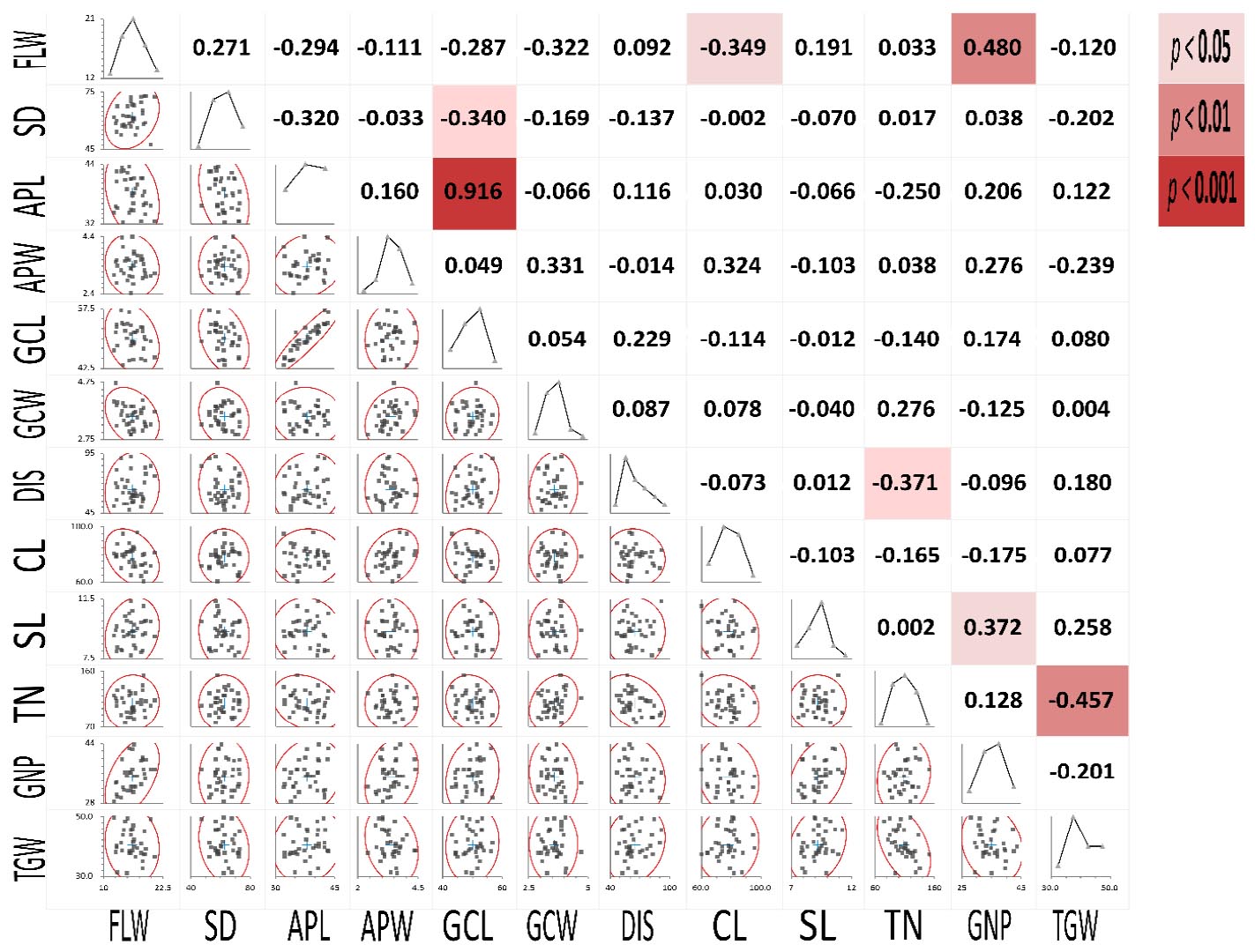
Fig. 9.
Correlation between stomatal traits of adaxial flag leaves and agronomic traits among 35 Korean wheat cultivars. Flag leaf width, FLW; Stomatal density, SD; Aperture length, APL and width, APW; Guard cell length, GCL and width, GCW; Distance between stomata, DIS; Culm length, CL; Spike length, SL; Tiller number, TN; Grain number per panicle, GNP; Thousand-grain weight, TGW.
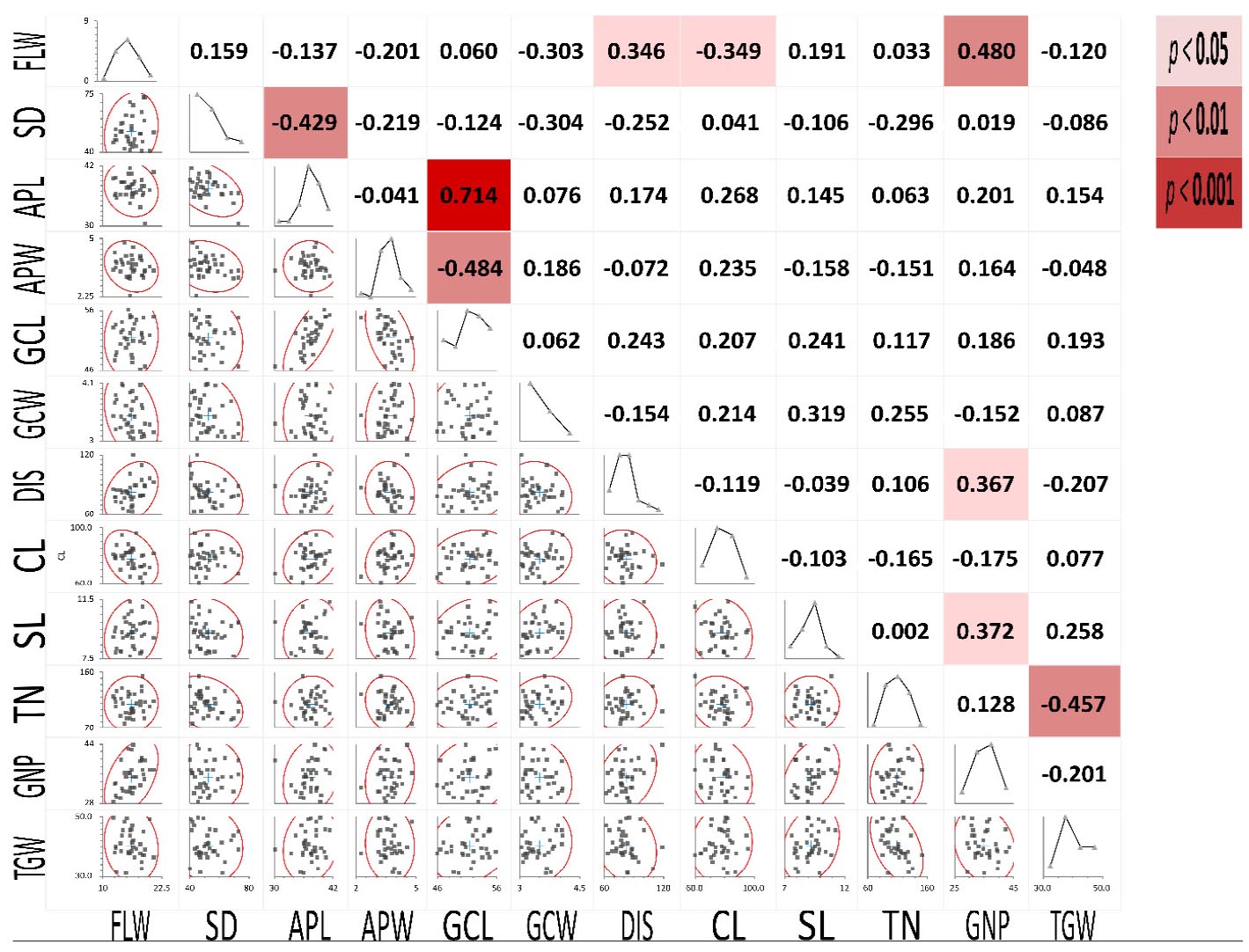
Fig. 10.
Correlation between stomatal traits of abaxial flag leaves and agronomic traits among 35 Korean wheat cultivars. Flag leaf width, FLW; Stomatal density, SD; Aperture length, APL and width, APW; Guard cell length, GCL and width, GCW; Distance between stomata, DIS; Culm length, CL; Spike length, SL; Tiller number, TN; Grain number per panicle, GNP; Thousand-grain weight, TGW.
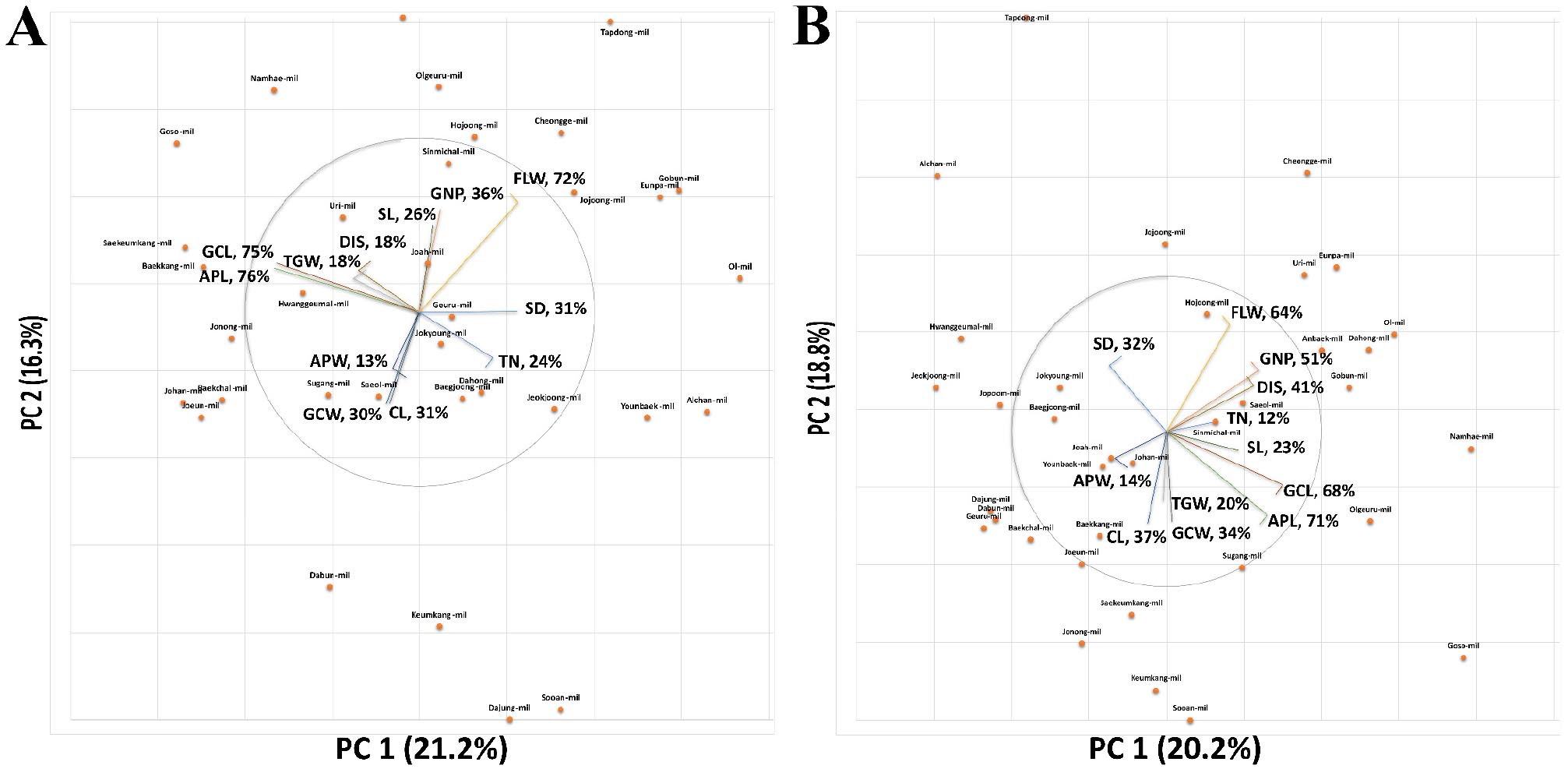
Multivariate correlations between stomatal and agronomic traits were verified by principal component analysis (Fig. 11). Principal components (PC) 1 and 2 explained 21.2% and 16.3% of the total variation for the adaxial side and 20.2% and 18.8% for abaxial side, respectively. For the adaxial side, there was a positive correlation between GCL with 75% eigenvector value and APL with 76% eigenvector value and a positive correlation between GCW with 30% eigenvector value, APW with 13% eigenvector value, and CL with 31% eigenvector value. Also, there was a positive correlation between SL with 26% eigenvector value and GNP with 36% eigenvector value. SL and GNP showed a negative correlation with APW, GCW, and CL. SD showed a negative correlation with GCL, APL, and TGW. For the abaxial side, there was a positive correlation between GNP with 51% eigenvector value and DIS with 41% eigenvector value and a positive correlation between TGW with 20% eigenvector value and GCW with 34% eigenvector value. SD with 32% eigenvector value showed a negative correlation with GCL with 68% eigenvector value and APL with 71% eigenvector value.
Conclusionally, there were no superior stomatal traits in some specific Korean wheat cultivars regardless of the adaxial and abaxial sides of the flag leaf. It can be explained that Korean wheat shows various diversity of stomatal traits. For this reason, there was no compacted clustering according to the stomatal traits. Also, the principal component analysis revealed low variation of principal components. However, FLW of both sides showed negative correlation with GCL but positive correlation with GNP. The DIS of the adaxial side negatively affected TN, and that of the abaxial side positively affected GNP. In near future, it is necessary to study the effect of distance between stomata on yield potential and to evaluate the variation of correlation between stomatal traits and agronomic traits in drought stress.