
Research Article

Korean Journal of Plant Resources. 1 February 2022. 1-9
https://doi.org/10.7732/kjpr.2022.35.1.001

ABSTRACT


MAIN

  • 서 언

  • 재료 및 방법

  •   들깨 종자 및 추출

  •   시약

  •   Caffeic acid 및 rosmarinic acid 함량 측정

  •   총 폴리페놀 함량(Total polyphenol contents, TPC) 측정

  •   DPPH free fadical 소거활성 측정

  •   통계분석

  • 결과 및 고찰

  •   Caffeic acid 및 rosmarinic acid 함량 측정

  •   총 폴리페놀 함량(Total polyphenol contents, TPC)측정

  •   DPPH Radical 소거능

  • 적 요

서 언

들깨(Perilla frutescecs var. japonica HARA.)는 꿀풀과 들깨속에 속하는 연간 약용식물로 한국, 일본, 인도 등 동아시아 지역에서 주로 재배되고 있다(Assefa et al., 2020; Gu et al., 2019; Kim et al., 2019). 들깻잎은 천식 및 감기와 같은 소화기 문제에 효과적인 것으로 알려져 있다. 약리학적으로 항우울증, 항암, 항산화 및 항염증 등의 특성을 가지고 있고, 한국과 중국, 일본에서 마시는 차를 비롯하여 광범위하게 사용되고 있다(Ahmed and Al-Zubaidy, 2020; Hashimoto et al., 2020; Heci, 2001; Lee et al., 2013; Lee and Ohmishi, 2001; Vînătoru1 et al., 2020; Yu et al., 2017). 최근 들깻잎의 기능성이 알려지며 육류, 해산물, 샐러드 및 초밥 등 다양한 식재료로 소비가 증가하고 있고, 이에 따라 들깻잎의 품종 개발을 하여 연간 생산이 가능해졌다(Ahmed, 2019; Hyun et al., 2003; Wang et al., 2020).

들깻잎에는 luteolin 및 apigenin 등을 포함한 플라보노이드, caffeic acid (CA) 및 rosmarinic acid (RA) 등을 포함한 페놀화합물과 다양한 천연 활성 물질이 함유되어 있는 것으로 알려져 있다(Reddy et al., 2021). 최근 연구에 따르면, 폴리페놀 화합물은 항산화 활성에 긍정적인 영향을 미치며(Bampouli et al., 2014; Burkhardt et al., 2015; Dincer et al., 2017; Javanmardi et al., 2003; Jinxue et al., 2021) 효소 억제제로 작용할 수 있다는 결과와 기능성 식품과 제약 제품에 포함될 수 있는 효과적인 후보인 것으로 보고되어 있다(Adisakwattana et al., 2009; Alagawnay et al., 2017; Jennings and Barnett, 1998; Karthishwaran et al., 2018; McDougall et al., 2005; Meihui et al., 2021).

페놀 화합물 중 하나인 caffeic acid는 항종양 및 항암 활성에 효과적이며(Ang et al., 2015; Giordanaet al., 2021), 가장 중요한 폴리페놀 중 하나로 알려진 rosmarinic acid는 면역조절, 항염증, 항암 및 항산화 활성과 같은 다양한 생물학적 활동을 하는 것으로 보고되어있다(Li et al., 2020; Saini et al., 2020; Swamy et al., 2018; Touiss et al., 2021).

본 연구는 국내 들깨의 우수 유전자원 선발을 위한 목적으로, 3개의 대조품종(다유, 대유, 안유)를 비롯하여 원산지가 모두 한국인 들깨 18자원을 이용하여 caffeic acid와 rosmarinic acid 함량을 비교 분석 및 항산화 활성 평가를 함으로써 기능성 천연물 관련 연구에 대한 기초 자료로 제공하고자 한다.

재료 및 방법

들깨 종자 및 추출

본 실험에서는 국립농업과학원 농업유전자원센터에서 보존된 들깨(Perilla frutescecs var. japonica HARA.) 18자원과 대조품종 다유, 대유 및 안유를 이용하였다. 2019년 전라북도 전주 인근 시험포장에서 표준재배법에 의거하여 재배 및 수확한 자원을 공시재료로 사용하였다.

항산화 활성 실험 및 caffeic acid와 rosmarinic acid 성분 분석 실험에 사용된 시료는 건조 들깻잎 2 g을 추출용매 75% EtOH, N2(g) 1,200 psi, 70℃ 조건으로 고속용매추출장치 ASE-200 (Dionex, Sunnyvale, CA, USA)를 이용하여 추출하였다. 추출된 시료는 진공농축기 HT-4X (American Laboratory Trading Lnc, East Lyme, CT, USA)를 40℃ 조건에서 농축하였다.

시약

Acetonitrile, ethyl alcohol, methyl alcohol, water는 Thermo Fisher Scientific (Inc., Co., MA, USA)에서 구입하였으며, 항산화 활성 평가 시약인 1,1-diphenyl-2-picryl-hydrazyl (DPPH), Folin-Ciocalteu Reagent, sodium carbonate (Na2CO3), formic acid 및 표준품으로 사용한 L-ascorbic acid, gallic acid는 Sigma-Aldrich (St. Louis, MO, USA)에서 구입하였다. 모든 시약은 analytical grade로 사용하였다.

Caffeic acid 및 rosmarinic acid 함량 측정

시료 들깻잎의 caffeic acid 및 rosmarinic acid 함량은 Ultra High Performance Liquid Chromatography(초고속액체크로마토그래피, UHPLC, Agilent 1290 Infinity Ⅱ LC, Agilent Technologies Co., Ltd., Santa Clara, CA, USA)를 이용하여 분석하였으며 표준용액 제조를 위해 사용된 caffeic acid 및 rosmarinic acid는 Sigma-Aldrich (St. Louis, MO, USA)에서 구입하였다. 분석 조건은 Table 1과 같다.

Table 1.

Conditions of UHPLC for identification and determination of rosmarinic acid

Instrument Agilent Technologies 1290 series
Column Eclipseplus C18 (1.8 ㎛, 2.1 ㎜ × 50 ㎜)
Mobile phase (A) : 0.1% formic acid in water
(B) : 0.1% formic acid in acetonitrile
Flow rate 0.4 mL/min
Injection 2 µL
Wavelength 330 ㎚
Time (min) A (%) B (%)
5 85 15
10 82 18
15 10 90

총 폴리페놀 함량(Total polyphenol contents, TPC) 측정

총 폴리페놀 함량은 microplate reader로 측정하였다. 96-well plate에 200 ppm 시료 100 µL와 1 N Folin-Ciocalteu Reagent 100 µL를 반응시킨 후 암실 조건으로 3분간 실온 보관하였다. 2% Na2CO3 100 µL를 넣은 뒤 암실 조건으로 30분간 실온에서 반응 후 750 ㎚에서 흡광도를 측정하였다. 표준물질은 Gallic acid를 사용하였으며, 각 시료에 대하여 3회 반복하여 측정하였다. 측정된 값은 Gallic acid equivalent 농도로 환산하여 비교하였으며, Singleton (1999)의 방법을 참고하여 측정하였다.

DPPH free fadical 소거활성 측정

96-well plate에 150 µM DPPH용액 150 µL와 시료 100 µL를 혼합하여 암실 조건으로 30분간 실온에 방치한 후 microplate reader를 이용하여 517 ㎚에서 흡광도를 측정하였다. 표준물질은 L-ascorbic acid를 사용하였으며, 각 시료에 대하여 3회 반복하여 측정하였다. 측정값은 L-ascorbic acid equivalent 농도로 환산하여 비교하였으며, Yoshida (1989)의 방법을 참고하였다.

통계분석

모든 실험에 대한 통계 자료의 값은 R 프로그램(www.r-project.org, R i386 4.0.3, Vienna, Austria)을 이용하였으며, p값은 **p < 0.01, ***p < 0.001일 때 유의성이 있는 것으로 간주하였다.

결과 및 고찰

Caffeic acid 및 rosmarinic acid 함량 측정

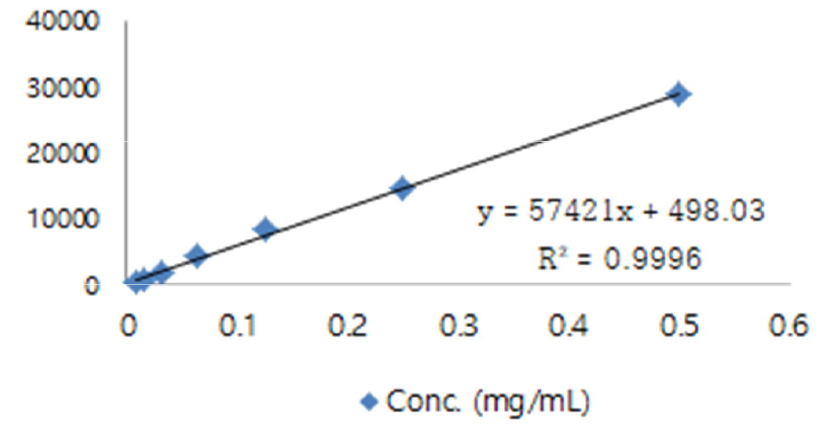
Caffeic acid 표준용액을 0.007-0.500 ㎎/mL의 단계적으로 희석하여 UHPLC로 분석 후 검량선을 작성하였으며, 0.9996로 높은 직선성의 상관계수(R2)를 보였다(Fig. 1). 들깻잎 18자원 시료의 caffeic acid는 평균 17.75 ㎎/g을 함유하고 있었으며, 함량 범위는 9.86-27.52 ㎎/g이었다. 대조품종인 다유, 대유 및 안유는 18.33 ㎎/g, 16.02 ㎎/g, 13.49 ㎎/g이었다. Caffeic acid 고함량 자원은 IT242238 (27.52 ㎎/g)으로 대종품종 중 가장 높은 값을 보인 다유(18.33 ㎎/g)보다 약 1.5배 높은 함량을 보였다(Table 2).
https://cdn.apub.kr/journalsite/sites/kjpr/2022-035-01/N0820350101/images/kjpr_35_01_01_F1.jpg
Fig. 1.

Calibration curve of caffeic acid Std. solution.

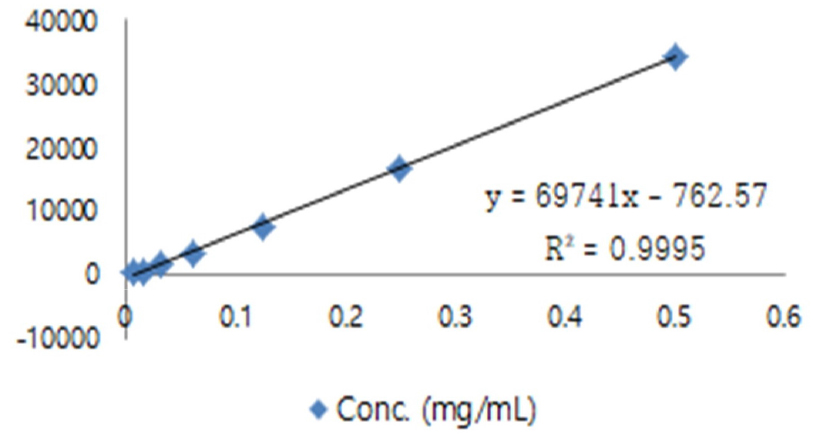
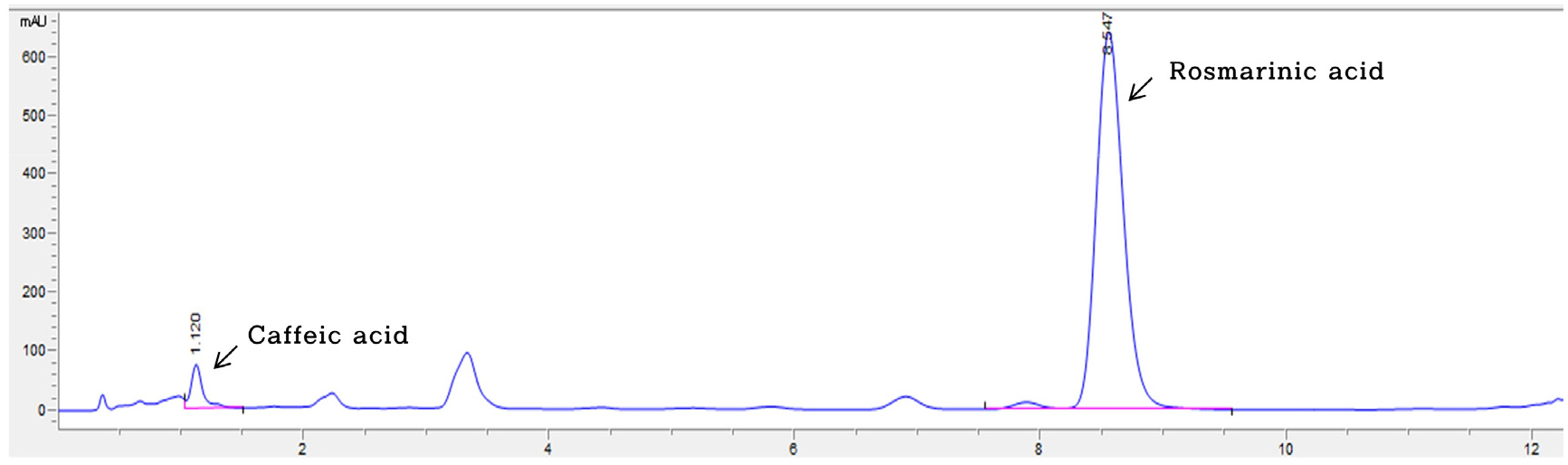
Rosmarinic acid 표준용액을 0.007-0.500 ㎎/mL의 단계적으로 희석하여 UHPLC로 분석 후 검량선을 작성하였으며, 0.9995로 높은 직선성의 상관계수(R2)를 보였다 (Fig. 2). 들깻잎 18자원 시료의 rosmarinic acid는 평균 61.88 ㎎/g을 함유하고 있었으며, 함량 범위는 49.14-90.30 ㎎/g이었다. 대조품종인 다유, 대유 및 안유는 49.00 ㎎/g, 64.21 ㎎/g, 28.94 ㎎/g이었다. Rosmarinic acid 고함량 자원은 IT226619 (90.30 ㎎/g)으로 대조품종 중 가장 높은 값을 보인 대유(64.21 ㎎/g)보다 약 1.4배 높은 함량을 보였으며(Table 2), 분석 조건으로 들깻잎 시료를 분석하였다(Fig. 3).
https://cdn.apub.kr/journalsite/sites/kjpr/2022-035-01/N0820350101/images/kjpr_35_01_01_F2.jpg
Fig. 2.

Calibration curve of rosmarinic acid Std. solution.

https://cdn.apub.kr/journalsite/sites/kjpr/2022-035-01/N0820350101/images/kjpr_35_01_01_F3.jpg
Fig. 3.

Chromatogram of caffeic acid, rosmarinic acid in Perilla leaf (IT226619).

Table 2.

Caffeic acid, rosmarinic acid contents and antioxidant activities of 18 accessions Perilla leaves extracts

No. Accession
Number
Origin Caffeic acid Rosmarinic acid TPC DPPH
㎎/g ㎍·(GAE)/㎎·DE ㎍·ASCE/㎎ DE
1 IT226619 KOR 9.86±0.36 90.30±2.60 378.19±1.17 122.90±0.09
2 IT105964 KOR 11.85±0.39 66.00±1.68 289.55±1.43 119.87±0.35
3 IT117091 KOR 20.35±0.52 65.14±1.64 289.86±1.74 120.10±1.35
4 IT242238 KOR 27.52±0.62 67.48±1.74 182.62±5.14 111.98±0.14
5 IT218811 UNK 21.07±0.53 63.13±1.57 232.56±3.14 115.63±0.31
6 IT242159 KOR 22.53±0.55 61.12±1.49 138.39±0.71 102.21±0.20
7 IT117102 KOR 11.75±0.39 60.67±1.47 260.04±0.8 118.67±0.29
8 IT221569 KOR 21.20±0.53 59.24±1.42 150.29±1.22 103.02±0.15
9 IT104886 KOR 14.38±0.43 59.16±1.42 306.18±1.60 118.70±0.16
10 IT285949 KOR 14.61±0.43 55.21±1.27 204.57±6.10 114.34±0.16
11 IT242254 KOR 13.52±0.42 54.59±1.24 237.21±2.46 116.20±0.13
12 IT235300 KOR 21.65±0.54 54.37±1.23 192.88±0.67 108.10±0.39
13 IT226620 KOR 20.48±0.52 52.19±1.15 179.49±1.41 104.16±0.21
14 IT242096 KOR 19.47±0.50 50.05±1.07 167.08±1.13 102.24±0.50
15 IT117006 KOR 20.72±0.52 49.29±1.04 155.17±3.14 105.59±0.09
16 IT247375 KOR 17.97±0.48 49.14±1.04 176.85±1.18 78.05±0.34
17 IT274907 KOR 17.25±0.47 67.25±1.72 222.84±1.31 121.27±0.07
18 IT226692 KOR 13.26±0.41 89.54±2.57 302.93±0.66 118.80±0.12
19 다유 KOR 18.33±0.47 49.00±0.18 2.47±0.53 88.77±0.72
20 대유 KOR 16.02±0.40 64.21±0.26 40.22±0.24 94.61±0.43
21 안유 KOR 13.49±0.36 28.94±0.16 38.38±0.12 88.63±0.64

총 폴리페놀 함량(Total polyphenol contents, TPC)측정

대조품종인 다유, 대유 및 안유는 12.35 ㎍·gallic acid equivalent (GAE)/㎎·dried extract (DE), 201.10 ㎍·(GAE)/㎎·(DE), 191.90 ㎍·(GAE)/㎎·(DE)의 함량을 보였다. 18자원 들깨의 총 폴리페놀 함량은 138.39-378.19 ㎍·(GAE)/㎎·(DE)의 범위, 평균 225.93 ㎍·(GAE)/㎎·(DE)을 보였다. 총 폴리페놀 고함량 자원은 IT226619 (378.19 ㎍·(GAE)/㎎·(DE))였으며, 대조품종 중 높은 값을 보인 대유(201.10 ㎍·(GAE)/㎎·(DE))보다 약 1.9 배 높은 함량을 나타냈다(Table 2).

DPPH Radical 소거능

한국 대조품종인 다유, 대유 및 안유는 88.77 ㎍·ascorbic acid equivalent (ASC)/㎎·dried extrant (DE), 94.61 ㎍·(ASC)/㎎·(DE), 88.63 ㎍·(ASC)/㎎·(DE)값을 보였다. 18자원 들깨 유전자원의 DPPH radical 소거능은 평균 111.21 ㎍·(ASC)/㎎·(DE)였으며, 78.05-122.90 ㎍·(ASC)/㎎·(DE) 범위를 보였다. 소거능이 가장 우수한 3자원은 IT226619 (122.90 ㎍·(ASC)/㎎·(DE)), IT274907 (121.27 ㎍·(ASC)/㎎·(DE)), IT117091 (120.10 ㎍·(ASC)/㎎·(DE))로 원산지는 모두 한국이었다(Table 2).

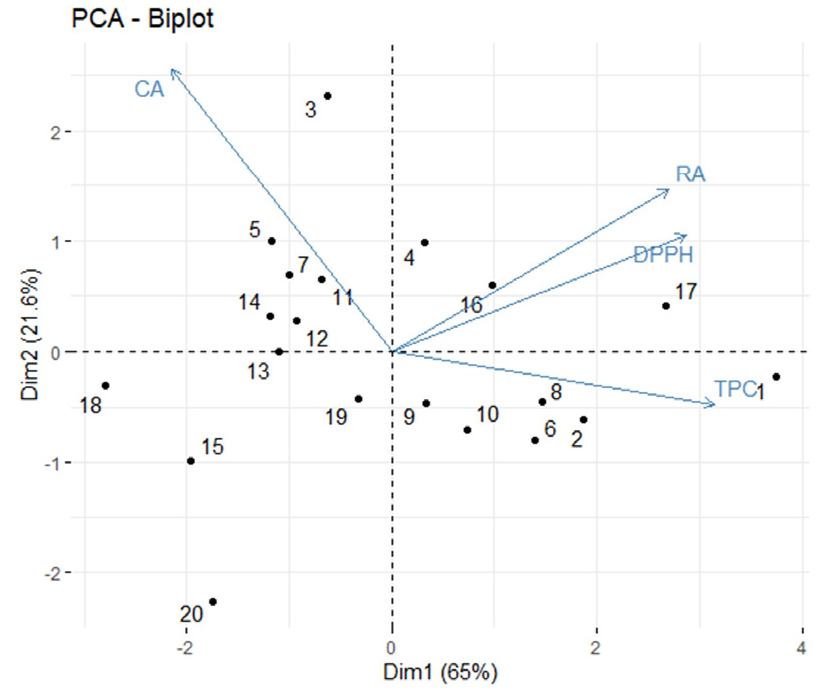
18자원 들깻잎의 주성분 분석 결과 제 1, 제 2 주성분으로 전체 변이의 86.59%를 해석 가능하며, caffeic acid와 rosmarinic acid 함량 값의 기여도가 높았다(Table 3). TPC와 DPPH 값은 33.03%, 27.44%로 Dim1에, caffeic acid와 rosmarinic acid 함량의 값은 65.25%, 21.43%로 Dim2에 많은 기여를 하며, Dim1과 Dim2로 전체 변이의 65%, 21.6% 해석이 가능하다(Fig. 4).

Table 3.

Eigenvalues generated and eigenvector by principal component analysis of Perilla 18 accessions

Characters PC1 PC2 PC3 PC4
Caffeic acid -0.6308 0.7500 0.0846 0.1801
Rosmarinic acid 0.7943 0.4298 -0.4213 -0.0822
TPCz 0.9268 -0.1395 0.0507 0.3452
DPPHy 0.8448 0.3089 0.4037 -0.1669
Standard deviation 1.6213 0.9285 0.5918 0.4315
Proportion of Variance 0.6503 0.2155 0.0876 0.0466
Cumulative Proportion 0.6503 0.8659 0.9535 1.0000

zTotal polyphenol content (TPC, ㎍·GAE/㎎·DE),

y1,1-diphenyl-2-picryl-hydrazyl (DPPH, ㎍·ASC/㎎·DE).

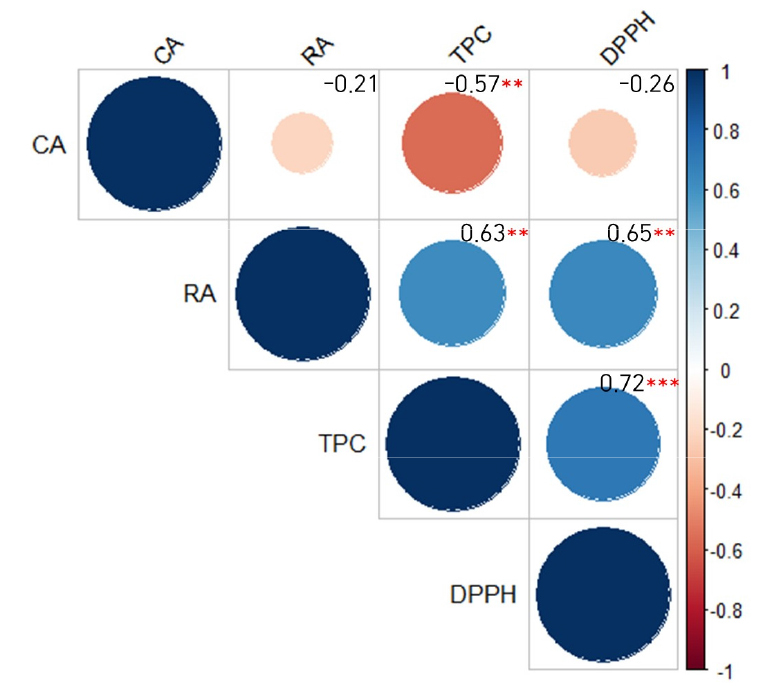
Caffeic acid는 rosmarinic acid와 -0.21, TPC와 -0.57**, DPPH와 -0.26의 음의 유의성을 보였으며, rosmarinic acid는 TPC와 0.63**, DPPH와 0.65**의 양의 유의성을 보였다. 또한, 항산화 활성 평가 실험인 TPC와 DPPH는 0.72***로 높은 양의 유의성(**p < 0.01, ***p < 0.001)을 보였고(Fig. 5, Table 4), 이 결과는 TPC와 DPPH 사이에 높은 연관성이 있다는 이전의 연구 결과와 유사하게 나타났다(Um et al., 2017; Tao et al., 2009). 페놀화합물 중의 하나인 caffeic acid는 TPC와 음의 유의성을 나타냈다. 들깻잎의 페놀화합물 중 caffeic acid보다 다른 페놀성 물질이 총 폴리페놀 함량(TPC)에 직접적인 영향을 나타내는 것으로 보이며, 본 연구에서는 caffeic acid보다 rosmarinic acid가 TPC에 긍정적인 영향을 미치는 것으로 사료된다.
https://cdn.apub.kr/journalsite/sites/kjpr/2022-035-01/N0820350101/images/kjpr_35_01_01_F4.jpg
Fig. 4.

PCA-biplot of Perilla genetic resources showing individual Perilla genetic resources, caffeic acid and rosmarinic acid content and antioxidant activities on the first two principal components (CA; caffeic acid, RA; rosmarinic acid).

https://cdn.apub.kr/journalsite/sites/kjpr/2022-035-01/N0820350101/images/kjpr_35_01_01_F5.jpg
Fig. 5.

Pearson’s correlation coefficients between CA, RA, TPC and DPPH in 18 Perilla leaf accessions (CA; caffeic acid, RA; rosmarinic acid).

Table 4.

Person correlation coefficients between major phenolic phytochemicals and antioxidant activities

Characters Caffeic acid Rosmarinic acid TPCz DPPHy
Caffeic acid 1.00* -0.21 -0.57** -0.26
Rosmarinic acid 1.00* 0.63** 0.65**
TPCz 1.00* 0.72***
DPPHy 1.00*

zTotal polyphenol content (TPC),

y1,1-diphenyl-2-picryl-hydrazyl (DPPH),

*Correlation is significance at the levels of **p < 0.01 and ***p < 0.001, respectively.

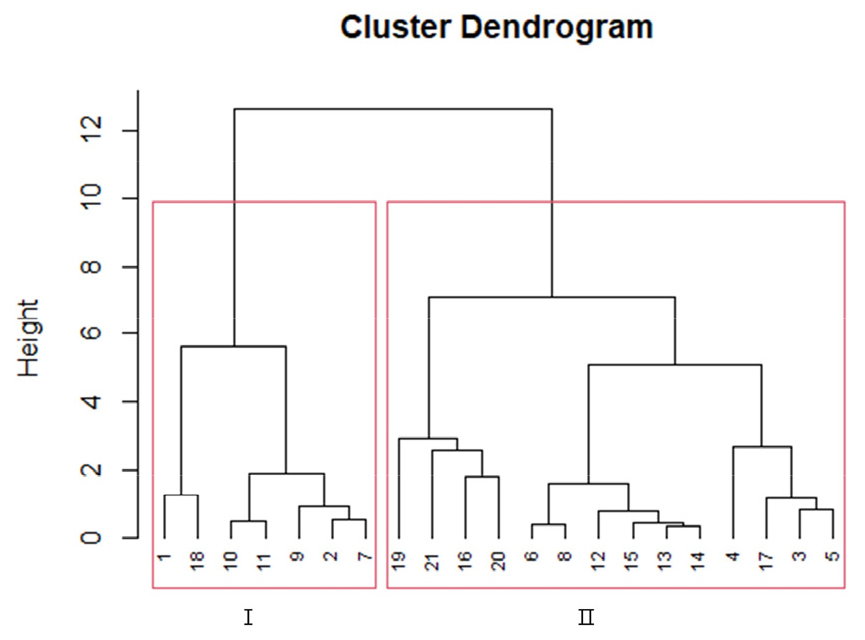
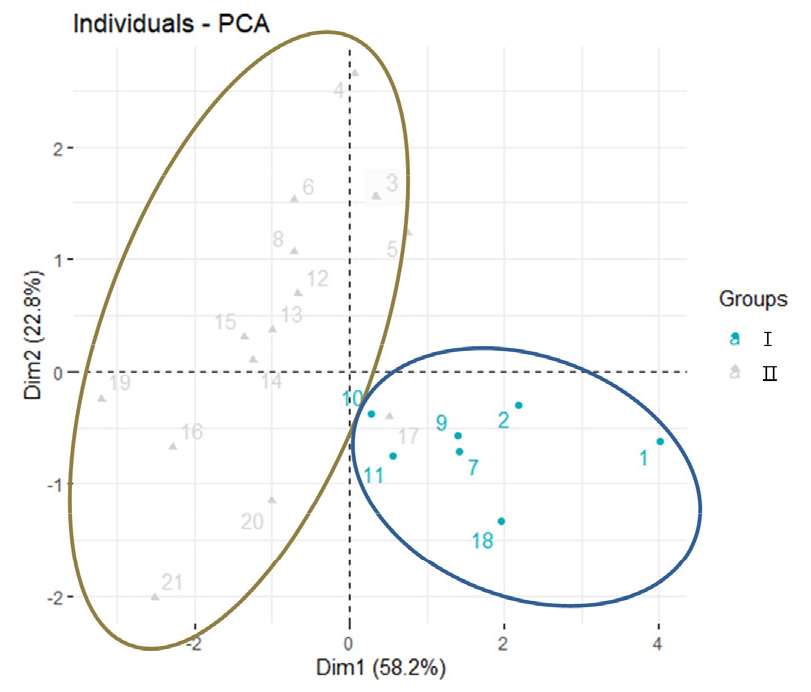
대조품종(다유, 대유, 안유)을 포함한 21자원의 들깻잎의 caffeic acid, rosmarinic acid 함량 값과 TPC 및 DPPH 값으로 군집분석 결과 2개의 그룹으로 나뉘었다. 그룹 Ⅰ에서 1번과 8번 자원, 그룹 Ⅱ에서 6번과 18번 자원은 성분 분석과 항산화 활성값이 유사한 값을 보였으며, 다른 자원들에 비해 근연 관계임을 나타냈다(Fig. 6). 그룹 간의 기여도는 두 주요 성분 (Dim 1, Dim 2)이 전체 변이의 58.2%, 22.8%임을 확인하였다(Fig. 7).
https://cdn.apub.kr/journalsite/sites/kjpr/2022-035-01/N0820350101/images/kjpr_35_01_01_F6.jpg
Fig. 6.

Hierarchical clustering analysis of phenolic phytochemicals and antioxdidant activities in Perilla 21 accessions. Hierarchical cluster analysis used by R standardize variables, measured the similarity and connected close of entities.

https://cdn.apub.kr/journalsite/sites/kjpr/2022-035-01/N0820350101/images/kjpr_35_01_01_F7.jpg
Fig. 7.

2D scatter diagram of principal component analysis (PCA) of 21 Perilla leaves based on caffeic acid and rosmarinic acid content, TPC, and DPPH.

3개의 대조 자원을 제외한 18 자원 중, 그룹 Ⅰ은 총 6개의 자원이었으며, caffeic acid (15.45 ㎎/g) 및 rosmarinic acid (63.29 ㎎/g), TPC (242.12 ㎍·(GAE)/㎎·(DE)), DPPH (114.07 ㎍·(GAE)/㎎·(DE))값을 보였다. 그룹 Ⅱ는 12개의 자원이었으며, caffeic acid (17.44 ㎎/g), rosmarinic acid (54.12 ㎎/g), TPC (201.08 ㎍·(GAE)/㎎·(DE)), DPPH (101.34 ㎍·(GAE)/㎎·(DE))값을 보였다. 그룹 Ⅰ의 caffeic acid 함량은 평균 17.75 ㎎/g보다 낮지만 rosmarinic acid 함량은 평균 61.88 ㎎/g보다 높으며 TPC와 DPPH 값 모두 평균보다 높았다. 그룹 Ⅱ의 caffeic acid 함량은 평균값과 비슷하고, rosmarinic acid 함량 값을 포함하여 TPC와 DPPH 값 모두 평균보다 낮았으며, 이 결과는 들깻잎의 caffeic acid 함량보다 rosmarinic acid 함량이 TPC와 DPPH에 더 영향을 주는 것으로 보여진다(Table 5).

Table 5.

Average values of each groups based on phenolic phytochemicals and antioxidant activities

Name Caffeic acid (㎎/g) Rosmarinic acid (㎎/g) TPCz DPPHy
Group Ⅰ (n=6) 15.45 63.29 242.12 114.07
Group Ⅱ (n=12) 17.44 56.47 201.08 101.34
Total (n=18) 17.75 61.88 225.93 111.21

zTotal polyphenol content (TPC, ㎍·GAE/㎎·DE).

y1,1-diphenyl-2-picryl-hydrazyl (DPPH, ㎍·ASC/㎎·DE).

이번 연구에서는 국내산 들깨 18자원의 caffeic acid, rosmarinic acid 함량과 항산화 활성을 확인하는 실험을 하였다. 주성분 분석 결과, caffeic acid와 rosmarinic acid 함량이 제1, 제2 주성분으로, 전체 변이의 86.59%를 해석이 가능하다는 결과를 확인하였다. 상관관계 결과, caffeic acid는 rosmarinic acid, TPC, DPPH와 -0.21, 0.57**, -0.26의 음의 유의성을 보였으며, rosmarinic acid는 TPC와 DPPH와 0.63**, 0.65**의 양의 유의성을 보였다. 총 페놀 함량과 DPPH는 높은 유의성이 있다(Arun et al., 2021)는 이전 연구에서 보고된 결과와 유사한 결과를 얻었으며, 들깻잎의 rosmarinic acid가 caffeic acid보다 항산화 활성에 긍정적인 영향을 나타내는 것으로 사료된다. Caffeic acid와 rosmarinic acid 함량과 TPC 및 DPPH 값으로 군집분석 결과 2개의 집단으로 나뉘어졌다. 그룹 간의 기여도는 두 주요 성분이 전체 변이의 58.2%, 22.8%였고, 그룹 Ⅰ에서 1번과 8번 자원, 그룹 Ⅱ에서 6번과 18번 자원은 다른 자원들에 비해 밀접한 관계임을 확인하였다. 18자원 들깻잎의 평균 caffeic acid, rosmarinic acid 함량과 TPC, DPPH값은 17.75 ㎎/g, 61.88 ㎎/g, 225.93 ㎍·(GAE)/㎎·(DE), 111.21 ㎍·(ASC)/㎎·(DE)였으며, 그룹 Ⅰ은 15.45 ㎎/g, 63.29 ㎎/g, 242.12 ㎍·(GAE)/㎎·(DE), 114.07 ㎍·(ASC)/㎎·(DE)였고, 그룹 Ⅱ는 17.44 ㎎/g, 56.47 ㎎/g, 201.08 ㎍·(GAE)/㎎·(DE), 101.34 ㎍·(ASC)/㎎·(DE)였다. 이는 들깻잎의 폴리페놀 화합물 중, caffeic acid 함량보다 rosmarinic acid 함량이 DPPH와 양의 유의성을 나타낸 결과와 유사하게 나타났다. 한국 대조 품종 중 caffeic acid 고함량을 보인 다유는 18.33 ㎎/g이었으며, 18자원 들깻잎에서 IT242238 (27.52 ㎎/g)가 다유의 약 1.5배 높은 함량을 보였다. Rosmarinic acid 고함량을 보인 대조 품종 대유는 64.21 ㎎/g였으며, 18자원 들깻잎에서 IT226619 (90.30 ㎎/g)가 대유의 약 1.4배 높은 함량을 보였다. 총 폴리페놀 함량이 높은 대조 품종 대유는 201.1 ㎍·(GAE)/㎎·(DE)였으며, 18자원 들깻잎에서 IT226919 (378.19 ㎍·(GAE)/㎎·(DE))는 대유보다 약 1.9배 높은 함량을 나타냈다. 대조 품종 중 대유는 94.61 ㎍·(GAE)/㎎·(DE)의 항산화 활성 값을 보였으며 18자원 들깻잎에서 활성 값이 가장 우수한 자원은 IT226619 (122.90 ㎍·(ASC)/㎎·(DE))였다. 한국 대조품종 다유, 대유 및 안유와 비교하여 caffeic acid, rosmarinic acid 함량과 항산화 활성이 높은 IT117102와 caffeic acid 함량은 낮지만 rosmarinic acid 함량과 항산화 활성이 높은 IT226619, IT226692, IT274907, IT105964 자원은 고기능성 들깨 품종 연구의 기초 자료로 활용할 수 있을 것으로 사료된다.

적 요

본 연구에서는 국내 들깨의 우수 유전자원 선발을 위한 목적으로, 3개의 대조품종(다유, 대유, 안유)을 비롯하여 원산지가 모두 한국인 들깨 18자원을 이용하여 caffeic acid와 rosmarinic acid 함량을 비교 분석 및 항산화 활성 평가를 수행하였다. 주성분 분석 결과, caffeic acid와 rosmarinic acid 함량이 제 1, 제2 주성분으로 전체 변이의 86.59%를 해석이 가능하였다. 상관관계 결과, caffeic acid는 rosmarinic acid, TPC, DPPH와 음의 유의성을 보였고, rosmarinic acid는 TPC 및 DPPH와 양의 유의성을 보였다. 총 페놀 함량과 DPPH는 높은 유의성이 있다는 이전 연구에서 보고된 결과와 유사한 결과를 확인하였으며, 들깻잎의 rosmarinic acid가 caffeic acid보다 항산화 활성에 긍정적인 영향을 나타내는 것으로 사료된다. Caffeic acid 고함량을 보인 IT242238 (27.52 ㎎/g)가 대조 품종인 다유(18.33 ㎎/g)의 약 1.5배 높은 함량을 보였으며, rosmarinic acid 고함량을 보인 IT226619 (90.30 ㎎/g)가 대조 품종인 대유(64.21 ㎎/g)의 약 1.4배 높은 함량을 보였다. 총 폴리페놀 함량이 높은 IT226919 (378.19 ㎍·(GAE)/㎎·(DE))는 대유(201.1 ㎍·(GAE)/㎎·(DE))의 약 1.9배 높은 함량을 나타냈다. 항산화 활성 값이 가장 우수한 IT226619 (122.90 ㎍·(ASC)/㎎·(DE))가 대조 품종인 대유(94.61 ㎍·(GAE)/㎎·(DE))보다 1.3배 높은 항산화 활성 값을 보였다. 이상의 연구결과로 IT242238, IT226619, IT226692, IT274907, IT105964 자원은 고기능성 들깨 품종 연구 및 기능성 천연물 관련 연구에 대한 기초 자료에 대한 기초 자료로 활용할 수 있을 것으로 사료된다.


Acknowledgements

본 연구는 농촌진흥청 연구사업(과제번호: PJ01418501)의 지원에 의해 수행된 결과입니다. 이에 감사드립니다.

References

1
Adisakwattana, S., P. Chantarasinlapin, H. Thammarat and S. Yibchok-Anun. 2009. A series of cinnamic acid derivatives and their inhibitory activity on intestinal α-glucosidase. J. Enzyme Inhib. Med. Chem. 24(5):1194-1200. 10.1080/1475636090277932619772492
2
Ahmed, H.M. 2019. Ethnomedicinal, phytochemical and pharmacological investigations of Perilla frutescens (L.) Britt. Molecules 24:102. 10.3390/molecules2401010230597896PMC6337106
3
Ahmed, H.M. and A.M.A. Al-Zubaidy. 2020. Exploring natural essential oil components and antibacterial activity of solvent extracts from twelve Perilla frutescens L. Genotypes. Arabian J. Chemistry 13:7390-7402. 10.1016/j.arabjc.2020.08.016
4
Alagawnay, M., M.E. Abd El-Hack, M.R. Farag, M. Gopi, K. Karthik, Y.S. Malik and K. Dhama. 2017. Rosmarinic acid: modes of action, medicinal values and health benefits. Animal Health Research Reviews 18(2):167-176. 10.1017/S146625231700008129110743
5
Ang, L.Z.P., R. Hashim, S.F. Sulaiman, A.Y. Coulibaly, O. Sulaiman, F. Kawamura and K.M. Salleh. 2015. In vitro antioxidant and antidiabetic activites of Gluta torquata. Ind. Crops Prod 76:755-760. 10.1016/j.indcrop.2015.07.065
6
Arun, K.G., D. Subhamoy, P.S. Partha, A. Giulia, M. Poonam and M. Andrea. 2021. Variation in phytochemical, antioxidant and volatile composition of pomelo fruit (Citrus grandis (L.) Osbeck) during seasonal growth and development. Plants 10:1941. 10.3390/plants1009194134579472PMC8467822
7
Assefa, A.D., Y.J. Jeong, J.H. Rhee, H.S. Lee, O.S. Hur, J.J. Noh, N.Y. Ro, A.J. Hwang, J.S. Sung and J.E. Lee. 2020. Using phenolic compounds and some morphological characters as distinguishing factors to evaluate the diversity of Perilla genetic Resources. Korean J. Plant Res. 33:40-49 (in Korean).
8
Bampouli, A., K. Kyriakopoulou, G. Papaefstathiou, V. Louli, M. Krokida and K. Magoulas. 2014. Comparison of different extraction methods of Pistacia lentiscus var. chia leaves: Yield, antioxidant activity and essential oil chemical composition. J. Appl Res Med Aromat Plants 1:81-91. 10.1016/j.jarmap.2014.07.001
9
Burkhardt, A., H.Y. Sintim, A. Gawde, C.L. Cantrell, T. Astatkie, V.D. Zheljazkov and V. Schlegel. 2015. Method for attaining fennel (Foeniculum vulgare Mill.) seed oil fractions with different composition and antioxidant capacity. J. Appl Res Med Aromat Plants 2:87-91. 10.1016/j.jarmap.2015.04.003
10
Dincer, C., M. Torun, I. Tontul, A. Topuz, H. Sahin-Nadeem, R.S. Gokturk and F. Ozdemir. 2017. Phenolic composition and antioxidant activity of Sideritis lycia and Sideritis libanotica subsp. linearis: Effects of cultivation, year and storage. J. Appl Res Med Aromat Plants 5:26-32. 10.1016/j.jarmap.2016.09.006
11
Giordana, F., T. Federico, G. Riccardo, C. Fabio, T. Claudio, B. Simone, T. Mahmud, K. Hassan and M. Carlo. 2021. Caffeic acid enhances the anti-leukemic effect of lmatinib on chronic myeloid leukemia cells and triggers apoptosis in cells sensitive and resistant to Imatinib. Int. J. Mol. Sci. 22(4):1644. 10.3390/ijms2204164433562019PMC7914550
12
Gu, S.G., Y.J. Son, J.Y. Park, S.G. Choi, M.H. Lee and H.J. Kim. 2019. Analysis of the seed metabolite profiles and antioxidant activity of Perilla varieties. Korean J. Food Sci. Technol. 51:193-199 (in Korean).
13
Hashimoto, M.C., Y.K. Tanabe, S.D. Hossain, K.T. Matsuzaki, M.H. Ohno, S.S. Kato, M.S. Katakura and O.M. Shido. 2020. Intake of alpha-linolenic acid-rich Perilla frutescens leaf powder decreases home blood pressure and serum oxidized low-density lipoprotein in Japanese adults. Molecules 25:11-15. 10.3390/molecules2509209932365849PMC7248687
14
Heci, Y. 2001. Valuable ingredients from herb Perilla, a mini review. Innov Food Technol. 29:32-33.
15
Hyun, K.W., J.H. Kim, K.J. Song, J.B. Lee, J.H. Jang, Y.S. Kim and J.S. Lee. 2003. Physiological functionality in Geumsan Perilla leaves from greenhouse and field cultivation. Korean J. Food Sci. Technol. 35:975-979 (in Korean).
16
Javanmardi, J., C. Stushnoff, E. Locke and J. Vivanco. 2003. Antioxidant activity and total phenolic content of Iranian Ocimum accessions. Food Chem. 83:547-550. 10.1016/S0308-8146(03)00151-1
17
Jennings, P., E. and A.H. Barnett. 1988. New approaches to the pathogenesis and treatmant of diabetic microangiopathy. Diabet Med. 5:111-117. 10.1111/j.1464-5491.1988.tb00955.x2964974
18
Jinxue, H., L. Lu, S. Mingyue, Y. Tianming, M. Xuejin and W. Yuanxing. 2021. Variations in phenolic acids and antioxidants activity of navel orange at different growth stages. Food Chemistry 360:129980. 10.1016/j.foodchem.2021.12998033984563
19
Karthishwaran, K., S.O.S.O.A. Shamisi, S.S. Kurup, S. Sakkir and A.J. Cheruth. 2018. Free-radical-scavenging and antioxidant capacities with special emphasis on enzyme activities and in vitro studies in Caralluma flava NE. Br. Curr Pharm Biotechnol. 32:156-162. 10.1080/13102818.2017.1379362
20
Kim, D.J., A.D. Assefa, Y.J. Jeong, Y.A. Jeon, J.E. Lee, M.C. Lee, H.S. Lee, J.H. Rhee and J.S. Sung. 2019. Variation in fatty acid composition, caffeic and rosmarinic acid content, and antioxidant activity of Perilla accessions. Korean J. Medicinal Crop Sci. 27:96-107 (in Korean). 10.7783/KJMCS.2019.27.2.96
21
Lee, J.H., K.H. Park, M.H. Lee, H.T. Kim, W.D. Seo, J.Y. Kim, I.Y. Baek, D.S. Jang and T.J. Ha. 2013. Identification, characterisation, and quantification of phenolic compounds in the antioxidant activity-containing fraction from the seeds of Korean perilla (Perilla frutescens) cultivar. Food Chem. 136:843-852 (in Korean). 10.1016/j.foodchem.2012.08.05723122135
22
Lee, J.K. and O. Ohnishi. 2001. Geographic differentiation of morphological characters among perilla crops and their weedy types in East Asia. Breed Sci. 51:247-255. 10.1270/jsbbs.51.247
23
Li, H.Z., Z. Ren, N.V. Reddy, T. Hou and Z.J. Zhang. 2020. In Silico evaluation of antimicrobial, antihyaluronidase and bioavailability parameters of rosmarinic acid in (Perilla frutescens) leaf extracts. SN Appl. Sci. 2:1547. 10.1007/s42452-020-03323-8
24
McDougall, G.J., F. Shpiro, P. Dobson, P. Smith, A. Blake and D. Stewart. 2005. Different polyphenolic components of soft fruits inhibit α-amylase and α-glycosidase. J. Agric. Food Chem. 53(7):2760-2766. 10.1021/jf048992615796622
25
Meihui, Y., L. Bo, Z. Fang, W. Qian, Z. Song, H. Dejian and L. Yue. 2021. Interactions between caffeic acid and corn starch with varying amylose content and their effects on starch digestion. Food Hydrocol. 114:106544. 10.1016/j.foodhyd.2020.106544
26
Reddy, N.V., H.Z. Li, T.N. Hou, M.S. Bethu, Z.Q. Ren and Z.J. Zhang. 2021. Phytosynthesis of silver nanoparticles using Perilla frutescens leaf extract: Characterization and evaluation of antibacterial, antioxidant, and anticancer activities. International J. Nanomed. 16:15-29. 10.2147/IJN.S26500333447027PMC7802595
27
Saini, R, K., Y.S. Keum and K.R. Rengasamy. 2020. Profiling of nutritionally important metabolites in green/red and green perilla (Perilla frutescens Britt.) cultivars: A comparative study. Ind. Crop. Prod. 151:112441. 10.1016/j.indcrop.2020.112441
28
Singleton, V.L., R. Orthofer and R.M. Lamuela-raventos. 1999. Analysis of total phenols and other oxidation substrates and antioxidants by means of Folin-Ciocalteu reagent. Methods Enzymol. 299:152-178. 10.1016/S0076-6879(99)99017-1
29
Swamy, M.K., U.R. Sinniah A. and Ghasemzadeh. 2018. Anticancer potential of rosmarinic acid and its improved production through biotechnological interventions and functional genomics. Appl Microbiol. Biotechnol. 102:7775-7793. 10.1007/s00253-018-9223-y30022261
30
Tao, W., J. Rósa and Ó. Guðrún. 2009. Total phenolic compounds, radical scavenging and metal chelation of extracts from Icelandic seaweeds. Food Chem. 116:240-248. 10.1016/j.foodchem.2009.02.041
31
Touiss, I., S. Ouahhoud, M. Harnafi, S. Khatib, O. Bekkouch, S. Amrani and H. Harnafi. 2021. Toxicological evaluation and hepatoprotective efficacy of rosmarinic acid-rich extract from Ocimum basilicum L. Evid based Complement Alternat Med. 2021:6676998. doi: 10.1155/2021/6676998. 10.1155/2021/667699833603821PMC7870305
32
Um, J.N., J.W. Min, K.S. Joo and H.C. Kang. 2017. Antioxidant, anti-wrinkle activity and whitening effect of fermented mixture extracts of Angelica gigas, Paeonid lactiflora, Rehmannia chinensis and Cnidium officinale. Korean J. Med. Crop. Sci. 25:52-159 (in Korean). 10.7783/KJMCS.2017.25.3.152
33
Vînătoru1, C., A. Peticilă, E. Barcanu, B. Mușat, C. Bratu and O.L. Agapie. 2020. Research on phenolic and biochemical variability in new genotypes of Perilla frutescens. Sci. Hortic. 1:498-503.
34
Wang, Z.X., Q.Q. Lin, Z.C. Tu and L. Zhang. 2020. The influence of in vitro gastrointestinal digestion on the Perilla frutescens leaf extract: Changes in the active compounds and bioactivities. J. Food Biochem. 44:e13530. 10.1111/jfbc.13530
35
Yoshida, T., K. Mori, T. Hatano, T. Okumura, I. Uehara, K. Komagoe, Y. Fujita and T. Okuda. 1989. Studies on inhibition mechanism of autooxidation by tannins and flavonoids. V: Radical scavenging effects of tannins and related polyphenols on 1,1-diphenyl-2-picrylhydrazyl radical. Chem. Pharm. Bull. 37:1919-1921. 10.1248/cpb.37.1919
36
Yu, H., J.F. Qiu, L.J. Ma, Y.J. Hu, L. Peng and W. Jian-Bo. 2017. Phytochemical and phytopharmacological review of Perilla frutescens L. (Labiatae), a traditional edible-medicinal herb in China. Food Chem Toxicol. 108:375-391. 10.1016/j.fct.2016.11.02327890564
페이지 상단으로 이동하기