


Introduction
Materials and Methods
Plant materials and crop seedlings cultivation
Treatment concentration of diniconazole
Treatment methods of diniconazole
Investigation of growth parameters and SPAD value
Statistical analysis
Results
Effects of application methods and treatment concentration of diniconazole on plant height and hypocotyl length
Effects of application methods and treatment concentration of diniconazole on leaf length, leaf width and leaf area
Effects of diniconazole treatment on SPAD values
Effect of the foliage treatment and the drenching treatment at seedling shipment
Discussion
Introduction
Healthy seedlings are important in both crop production and smart farms system. Producing healthy plug seedlings during the seedling-raising process enables efficient transplanting, improves quality and productivity, and reduces management costs. Nevertheless, considering seedling environment within protected cultivation facilities, overgrowth of seedlings is one of major issues to the production of healthy plug seedlings. Various plant growth regulation techniques have been developed to solve this problem (Bae, 1999; Kim et al., 1998; Lim et al., 1997; Zhang et al., 2003), and the application of plant growth retardants is widely adopted currently (Gibertz, 1990; Liberth, 1990; Suh and Chung, 1986; Sung et al., 2004; Yun et al., 2007).
The quality of seedlings varies depending on the type of crop, treatment timing, treatment concentration (Jang et al., 2020; Jeong et al., 2021; Sun et al., 2010; Yun et al., 2007), and especially, how to treatment with leaf or root of the growth inhibitors during the raising seedling (Jang et al., 2020; Jeong and Bae, 2024). In addition, careful reviewing crops and environmental condition is needed to minimize phytotoxicity of the seedling, because sensitivity of plants by the concentration of growth retardant is high (Shin and Jeong, 2002; Venkatramesh and Croteau, 1989; Zhang et al., 2003).
Studies on the growth inhibitory effects of triazole have been carried out on various crops (Gibertz, 1992; Kim et al., 2016; Sun et al., 2009; Sung et al., 2004; Yun et al., 2007). In particular, diniconazole, a triazole fungicide, is effective in inhibiting the growth of cucumbers (Sun et al., 2010; Sun et al., 2009), gourds (Bae, 1999; Kim et al., 1998), melon (Jeong and Bae, 2024) and tomatoes (Choi et al., 2001; Jang et al., 2020; Sun et al., 2009; Yun et al., 2007), highland summer-cabbage (Shin and Jeong, 2002), and suppression of the bolting of spring cabbage (Seong et al., 2003). Thus, the diniconazole component is used for the purpose of preventing over-growth of seedlings due to high cultivation-density of crops, a high temperature and a humidity, and lack of light in the field of raising seedlings (Hahm et al., 2023; Jung et al., 2020; Zhang et al., 2003). Moreover, study has indicated that an appropriate concentration of triazole not only does not inhibit the growth of root parts in seedlings, but also promotes it (Jeong et al., 2021; Jung et al., 2020; Upadhyaya et al., 1991).
A commercially available diniconazole on South Korea, ‘Binnari’ mainly suppressed seedling growth through foliar spraying treatment at recent years. But growth inhibition effect is halved during the foliar spraying at high temperatures, and there is a risk of phytotoxicity when the foliar spraying is repeatedly done at high concentrations with short periods (Shin and Jeong, 2002; Venkatramesh and Croteau, 1989; Zhang et al., 2003). It is needed to investigate an alternative, a drenching method to solve the problem that does not have the risk of phytotoxicity on plug seedling. Because most of domestic nurseries adopt overhead irrigation (Kang et al., 2023), it is necessary to adopt method of maintaining persistence by absorbing diluted diniconazole from leaves and roots by employing the trenching irrigation method.
There have been studies that foliar treatment with diniconazole resulted in an increase in root fresh weight (Jung et al., 2020; Kim et al., 2016), and has reported that at optimal concentrations root development has not adversely affected after transplanting (Jung et al., 2020). However, even a study has examined foliar and drench treatments in cucurbit crops (Jeong and Bae, 2024), research on field-practical drench method remains insufficient in Korea, so far. Thus, this study was conducted to evaluate for the effect of diniconazole on seedling growth of cucumber and Korean zucchini according to treatment methods and treatment concentration, and obtain data on healthy seedling production that can be used in raising seedling field and self-cultivation farms.
Materials and Methods
Plant materials and crop seedlings cultivation
Plant materials used in this experiments are cucumber (Cucumis sativus L.) ‘Saeromi’ (Haeoreum Seeds) and Korean zucchini (Cucurbita moschata) ‘Nonghyeopaehobak’ (Nonghyeop Seeds).
For raising seedlings, ‘Luxury Gold’(Seoul Bio Co., Ltd., Korea) were used as nursery media, and plastic ports (Bumnong Co., Ltd., 50 districts) were used as seedling containers. Germination was managed at 28℃ and humidity at 95 to 100% in the germination room by using a sowing machine (Smart Sowing System, Helperovotech, Korea), and then the germinated seeds were moved to the nursery (Jeong and Bae, 2024).
As environmental management the nursery was controlled by maintaining using an automatic temperature controller (Magma, GreenCs Co., Korea). The ventilation temperature is 20℃ to 26℃, a daytime temperature is 20℃ to 28℃, and a heating temperature was at least 18℃. Air in nursery was heated by circulating hot water (60℃) by an electric heater warmer and a hot water pipe to control the heating temperature. According to the established practices of the nursery, supply of nutrient components by overhead-watering was conducted once by every two days in summer and once by every four to five days in winter (Jeong, 2024). This experiment was conducted from April 2023 to October 2023 at the Raising Seedling Center of Gokseong Agricultural Cooperative in Gokseong-gun, Jeollanam-do, South Korea (Jeong, 2024).
Treatment concentration of diniconazole
The concentration of foliar spraying treatment was set to 5 levels (0 ㎎/L, 5 ㎎/L, 10 ㎎/L, 20 ㎎/L and 37.5 ㎎/L) by referring to previous research (Bae, 1999). Because there are no prior studies, the overhead-watering drenching treatment was conducted at the concentration of 0 to 10 ㎎/L as a preliminary experiment. Treatment concentration was set to 5 ㎎/L or less in this experiment, because above 6 ㎎/L caused severe dwarfing, making it unsuitable for use in the treatment (Jeong and Bae, 2024).
Treatment methods of diniconazole
According to Jeong and Bae (2024), diniconazol was treated with each seedlings. Foliar spraying treatment was performed as a total of 5 levels at 0 ㎎/L, 5 ㎎/L, 10 ㎎/L, 20 ㎎/L and 37.5 ㎎/L concentrations, and the treatment was performed three times on the 5th day, the 10th day and the 15th day after germination. Overhead-watering irrigation treatment was treated an one time on the 5 days after germination with 2L per each tray, at a total of 4 levels at 0 ㎎/L, 1.25 ㎎/L, 2.5 ㎎/L and 5 ㎎/L concentrations, respectively.
Investigation of growth parameters and SPAD value
After treating diniconazole (5%, Dobang-Agro, Korea) with concentration and application method mentioned below, the changes in seedling growth were assessed.
Plant growth investigation were carried out by 5 days intervals after application with diniconazole, and the final survey was performed prior to shipment with the seedlings. As experimental parameters including plant height, hypocotyl length, leaf length, leaf width, leaf area, and SPAD value were evaluated. The growth factors except leaf areas were determined by measuring tape and vernier calipers (Mitutoyo, Japan). According to Seo (2016) the leaf area was calculated as leaf length × leaf width × 0.246. SPAD value was measured three times at the center of the first true leaf and the second true leaf avoiding the leaf veins by a SPAD meter (SPAD-502Plus, Konica Minolta, Japan).
Statistical analysis
Experimental data were collected from a total of 15 seedlings, with 5 seedlings per replicate on 3 experiments, and were analyzed statistically. The statistical analysis with the data obtained in this experiment was determined using the SAS program (V.9.4 Cary, NC, USA) to test the significance of the treatment section at the 5% significance level through Duncan’s multiple range test (DMRT).
Results
Effects of application methods and treatment concentration of diniconazole on plant height and hypocotyl length
A various concentrations of diniconazole was treated in the leaf areas at concentrations of 5.0 ㎎/L to 37.5 ㎎/L on 5 days to 15 days in the seed germination in order to evaluate the effects by treatment methods, foliar spraying and drenching irrigation, and concentration of diniconazole on growth inhibition during the process of raising seedling in cucumber and Korean zucchini (Fig. 1, Fig. 2). Plant height (Fig. 1) and hypocotyl length (Fig. 2) of the seedlings were measured on the 5 days to 15 days after treating diniconazole with the foliar spraying. In addition, diniconazole was treated by the drenching method at concentrations of 1.25 ㎎/L to 5 ㎎/L on 5 days after the germination, and growth inhibitions were measured at 5 days intervals after diniconazole application.

Fig. 1.
Effect of foliage and drenching treatments of diniconazole (㎎/L) on plant height (㎜) of cucumber (Cucumis sativus L. cv. Saeromi) (A) and Korean zucchini (Cucurbita moschata cv. Nonghyeobaehobak) seedlings (B). Seeding date of cucumber: May 7, 2023. Seeding date of Korean zucchini: Oct. 2, 2023. Fol.: Foliage treatment, Dre.: Drenching treatment.

Fig. 2.
Effect of foliage and drenching treatments of diniconazole (㎎/L) on hypocotyl length (㎜) of cucumber (Cucumis sativus L. cv. Saeromi) (A) and Korean zucchini (Cucurbita moschata cv. Nonghyeobaehobak) seedlings (B). Seeding date of cucumber: May 7, 2023. Seeding date of Korean zucchini: Oct. 2, 2023. Fol.: Foliage treatment, Dre.: Drenching treatment.
In case of cucumber, as a result of foliage treatment of diniconazole, as time passed, as the treatment concentration increased, the growth of plant height and hypocotyl length was suppressed. Especially, in the 37.5 ㎎/L treatment, which is the maximum concentration of the foliage application, the plant height and the hypocotyl length appeared the largest decrease in the single application compared with the control (Fig. 1-A, Fig. 2-A). Because the growth gradually recovered and had returned to normal by the time the raising seedlings were shipped, diniconazol was applied in the second and the third treatments. And then plant growth was suppressed to the level observed with drench treatment by 5 days after each treatment (Fig. 1-A, Fig. 2-A). In addition, because dwarfness recovered somewhat in a single diniconazol treatment with foliar spraying, the foliar spraying treatment was unsuitable for the seedling shipment, practically.
In case of the drenching treatment of diniconazole, as the treatment concentration of diniconazole increased, the plant height and the hypocotyl length of cucumber were significantly suppressed (Fig. 1-A, Fig. 2-A). In particular, the growth of the plant was strongly inhibited from 2.5 ㎎/L to 5 ㎎/L, resulting in a distinct dwarfing in hypocotyl length (Fig. 2-A). Even with a single apply of diniconazole, the drenching treatment has shown stable growth with continuing inhibitory effect compared with the foliage spray, showing the plant seedling has significant inhibition in 5 ㎎/L treatment (not shown photos). Thus, the concentration was judged to be unsuitable for seedling shipment.
In order to determine the effects by treatment methods on growth pattern during the process of raising seedling in Korean zucchini, a various concentrations of diniconazole were treated with the same concentration as previously described for cucumber. And then plant height (Fig. 1-B) and hypocotyl length (Fig. 2-B) of the seedlings were measured on the 5 days to 20 days after treating diniconazole. Moreover, diniconazole was treated with the same concentration and as previously described for cucumber, and the growth patterns were evaluated at 5-day intervals after diniconazole application.
In case of foliage treatment of diniconazole, as time passed and the treatment concentration increased, the growth of plant height and hypocotyl length was effectively suppressed. At the 20 ㎎/L and 37.5 ㎎/L treatments, the plant height and the hypocotyl length were showed a significant decrease in the single application compared with the control (Fig. 1-B, Fig. 2-B). However, the growth gradually recovered and had returned to normal by the time the raising seedlings were shipped. Therefore, diniconazol was applied in the second, and the third treatments, and by 5 days after each treatment, plant growth was suppressed to the level observed with drench treatment (Fig. 1-B, Fig. 2-B).
During the drenching treatments of diniconazole, as the concentration of diniconazole increased, the plant height and the hypocotyl length were suppressed (Fig. 1-B, Fig. 2-B) showing gradual decrease at 1.25 ㎎/L and 2.5 ㎎/L. However, the growth of the plant was strongly suppressed 5 ㎎/L, in particular, resulting in a distinct dwarfing in hypocotyl length (Fig. 2-B). The drenching treatment showed stable growth even with a single treatment due to a continuous inhibitory effect compared with the foliage spray, showing the plant severe inhibition in 5 ㎎/L treatment. Thus, the concentration was judged to be unsuitable for seedling shipment in Korean zucchini.
Effects of application methods and treatment concentration of diniconazole on leaf length, leaf width and leaf area
As a result of foliage treatment of diniconazole in cucumber, as the treatment concentration increased, the inhibition of leaf-length in the 1st and the 2nd true leaves was more strongly inhibited. The growth inhibitory effects of seedlings were more greater in the second true leaf than those of the first leaf (Fig. 3-A, 3-B). Suppression of leaf width was less propound compared with the leaf-length, and no significant difference was occurred in the inhibitory effect with the diniconazole application at the first and second true leaves of the seedlings (Fig. 4-A, 4-B). The leaf area was decreased with the increasing treatment concentration of diniconazole in both the first and second true leaves of the seedling (Fig. 5-A, 5-B). In case of the drenching treatment of diniconazole in cucumber, leaf length, leaf width, and leaf area appeared a clear inhibitory effect of growth at all the concentration, like the foliage treatment (Fig. 3-A to Fig. 5-B). And a continued inhibitory affect and stable growth were shown in the drenching treatment compared with the foliage spray.
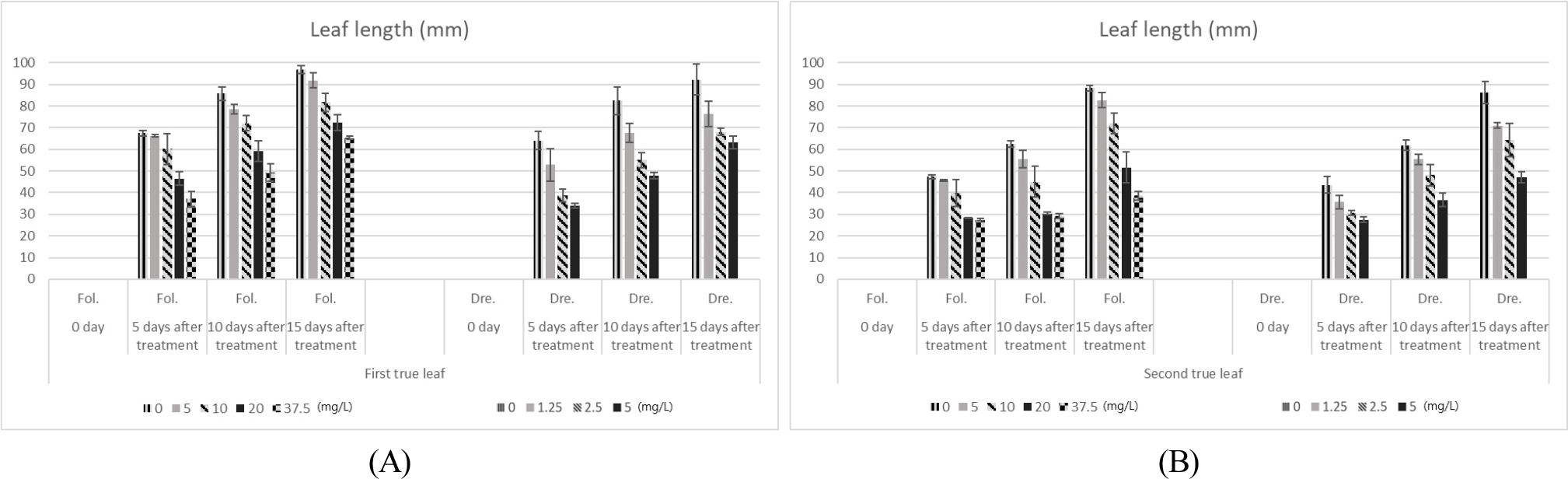
Fig. 3.
Effect of foliage and drenching treatments of diniconazole (㎎/L) on leaf length (㎜) of cucumber (Cucumis sativus L. cv. Saeromi) with the 1st true leaf (A) and the 2nd true leaf (B). Graphs on left: Foliage treatment, Right: Drenching treatment. Seeding date: May 7, 2023. Fol.: Foliage treatment, Dre.: Drenching treatment.
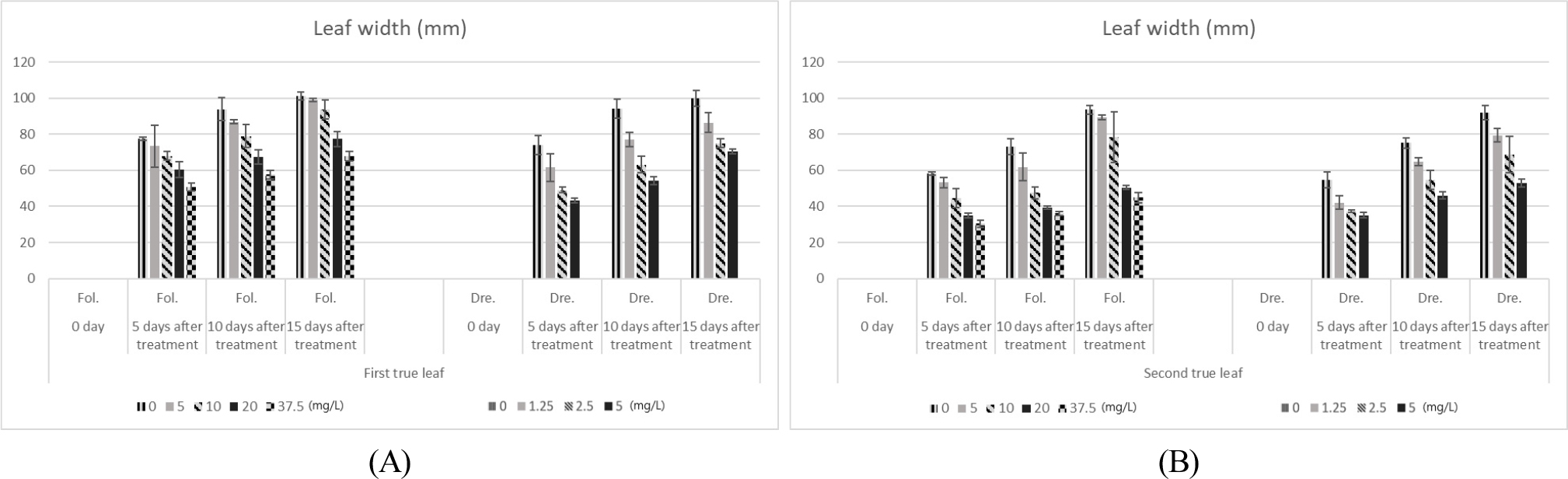
Fig. 4.
Effect of foliage and drenching treatments of diniconazole (㎎/L) on leaf width (㎜) of cucumber (Cucumis sativus L. cv. Saeromi) with the 1st true leaf (A) and the 2nd true leaf (B). Graphs on left: Foliage treatment, Right: Drenching treatment. Seeding date: May 7, 2023. Fol.: Foliage treatment, Dre.: Drenching treatment.
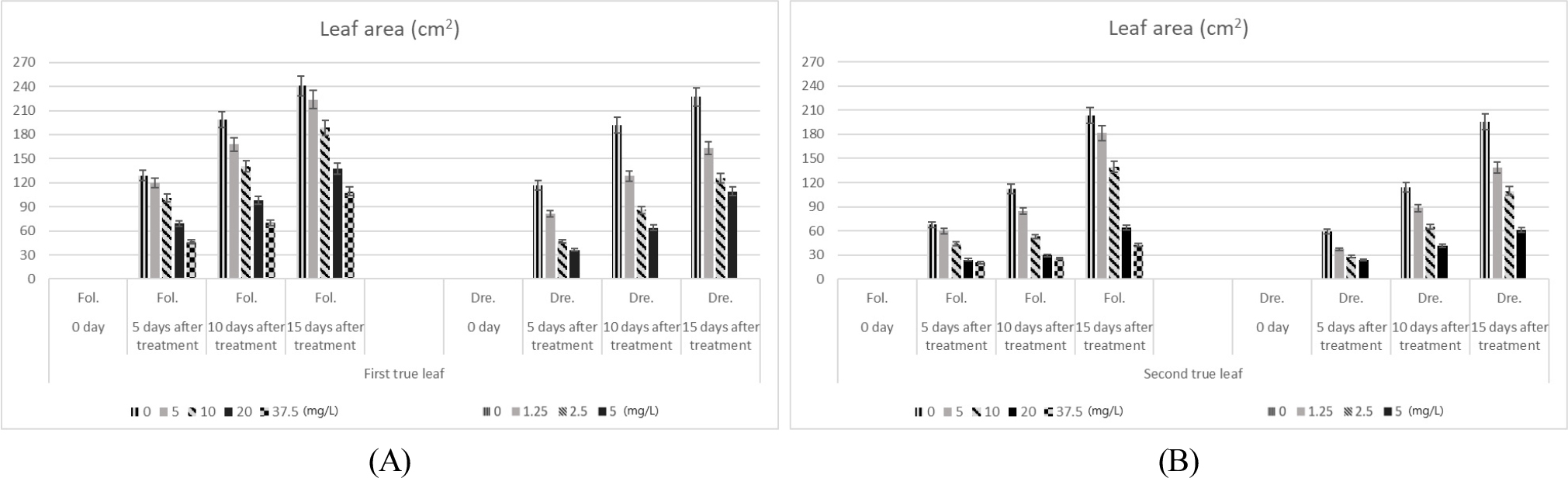
Fig. 5.
Effect of foliage and drenching treatments of diniconazole (㎎/L) on leaf area (㎠) of cucumber (Cucumis sativus L. cv. Saeromi) with the 1st true leaf (A) and the 2nd true leaf (B). Graphs on left: Foliage treatment, Right: Drenching treatment. Seeding date: May 7, 2023. Fol.: Foliage treatment, Dre.: Drenching treatment.
In case of foliage treatment in Korean zucchini, a propound inhibitory effect of growth was observed at high concentrations of diniconazole in leaf-length of the 1st and the 2nd true leaves, and the 1st true leaf has a marked inhibitory effect compared with the 2nd true leaf (Fig. 6-A, 6-B). The suppression of leaf width was less propound compared with that of the leaf-length, and the inhibitory effects by the diniconazole treatment were comparable to the first and the second true leaves (Fig. 7-A, 7-B). The leaf area decreased as treatment concentration of diniconazole increased in both the first and the second true leaves (Fig. 8-A, 8-B). In case of the drenching treatment at Korean zucchini, a pronounced inhibitory effect by diniconazole was observed in leaf length (except 10 days treatment of the 2nd true leaf), leaf width, and leaf area (except 10 days treatment of the 2nd true leaf) compared with the foliage spray (Fig. 6-A to 8-B), and a continuous inhibitory affect and stable growth were appeared compared with the foliage treatment.

Fig. 6.
Effect of foliage and drenching treatments of diniconazole (㎎/L) on leaf length (㎜) of Korean zucchini (Cucurbita moschata cv. Nonghyeobaehobak) with the 1st true leaf (A) and the 2nd true leaf (B). Graphs on left: Foliage treatment, Right: Drenching treatment. Seeding date: Oct. 2, 2023. Fol.: Foliage treatment, Dre.: Irrigation treatment with drenching.

Fig. 7.
Effect of foliage and drenching treatments of diniconazole (㎎/L) on leaf width (㎜) of Korean zucchini (Cucurbita moschata cv. Nonghyeobaehobak) with the 1st true leaf (A) and the 2nd true leaf (B). Graphs on left: Foliage treatment, Right: Drenching treatment. Seeding date: Oct. 2, 2023. Fol.: Foliage treatment, Dre.: Irrigation treatment with drenching.

Fig. 8.
Effect of foliage and drenching treatments of diniconazole (㎎/L) on leaf area (㎠) of Korean zucchini (Cucurbita moschata cv. Nonghyeobaehobak) with the 1st true leaf (A) and the 2nd true leaf (B). Graphs on left: Foliage treatment, Right: Drenching treatment. Seeding date: Oct. 2, 2023. Fol.: Foliage treatment, Dre.: Drenching treatment.
Effects of diniconazole treatment on SPAD values
SPAD values were slightly higher in both crops with drench treatment than with foliar application. Also, the values showed a similar pattern in the 1st and the 2nd true leaves. In both crops, the first true leaf had a higher SPAD value than the 2nd true leaf (Fig. 9-A to 10-B). As the treatment concentration of diniconazole in both of foliage treatment and drenching treatment was increased in both cucumber (Fig. 9-A, 9-B) and Korean zucchini (Fig. 10-A, 10-B), the higher the concentration of SPAD value. In addition, during the drenching treatment the SPAD value tended to increased steadily until shipment in cucumber (Fig. 9-A, 9-B). In contrast, the SPAD value slightly decreased in 15 days after the drenching treatment in Korean zucchini (Fig. 10-A).

Fig. 9.
Effect of foliage and drenching treatments of diniconazole (㎎/L) on SPAD of cucumber (Cucumis sativus L. v. Saeromi) with the 1st true leaf (A) and the 2nd true leaf (B). Graphs on left: Foliage treatment, Right: Drenching treatment. Seeding date: May 7, 2023. Fol.: Foliage treatment, Dre.: Drenching treatment.
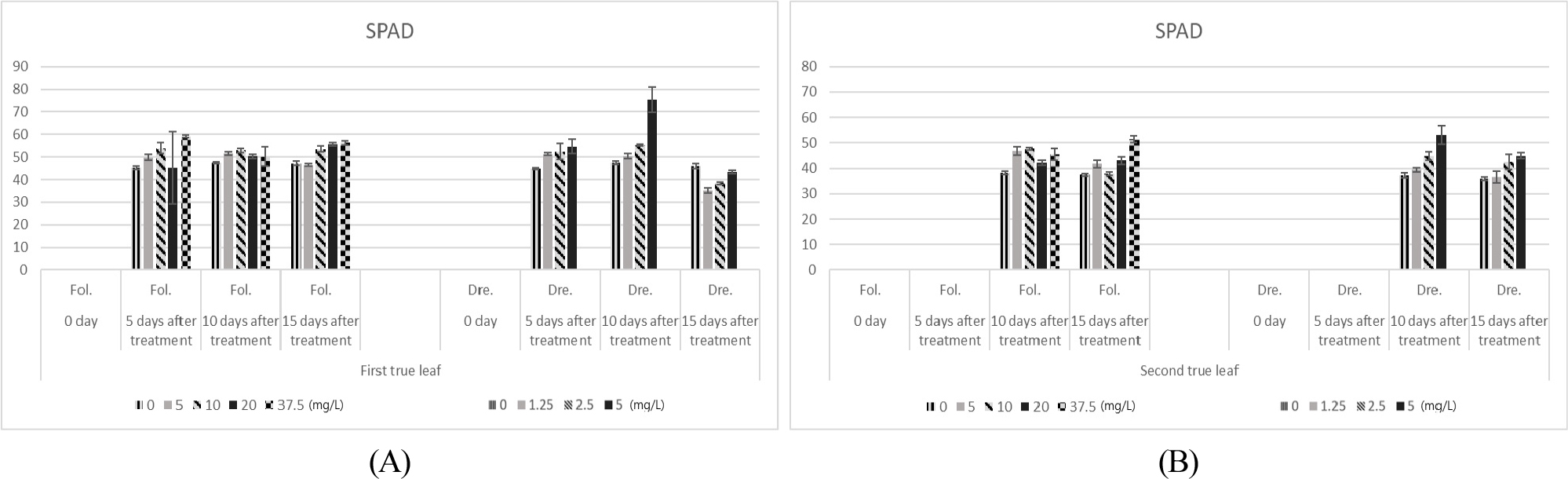
Fig. 10.
Effect of foliage and drenching treatments of diniconazole (㎎/L) on SPAD of Korean zucchini (Cucurbita moschata cv. Nonghyeobaehobak) with the 1st true leaf (A) and the 2nd true leaf (B). Graphs on left: Foliage treatment, Right: Drenching treatment. Seeding date: Oct. 2, 2023. Fol.: Foliage treatment, Dre.: Drenching treatment.
Effect of the foliage treatment and the drenching treatment at seedling shipment
In particular, the inhibition effects of diniconazole treatment for seedling growth were focused at the time of seedling shipment day (Table 1, Table 2). When the effects of diniconazole were compared with the foliage treatment and the drenching treatment in cucumber, as the application concentration increased in both methods, the effects of inhibition were increased (Table 1). Based on the stage of shipment, the optimal concentrations of the foliage spray and the drenching application were 20 ㎎/L in the foliage treatment and 1.25 ㎎/L of the drenching treatment, respectively. As a result, even at a concentration 16 times lower compared with the leaf treatment, the inhibitory effect of the seedling growth maintained in 1.25 ㎎/L of the drenching treatment. The inhibition of the seedling growth was serious at the concentration of 37.5 ㎎/L in the foliage treatment and 5 ㎎/L in the drenching treatment. Thus, the shipment for plug seedlings was impossible at the treatment concentration in cucumber (Table 1).
Table 1.
Comparison of growth pattern by foliage treatment and drenching treatment of diniconazole just before the seedling shipment day in cucumber (Cucumis sativus L. cv. Saeromi)z.
| Diniconazole (㎎/L) | Plant height (㎜) |
Hypocotyl length (㎜) |
Leaf length (㎜) |
Leaf width (㎜) |
Leaf area (㎠) | SPAD |
No. of leaves | ||||||||
| Fol.y | Dre.x | Fol.y | Dre.x | Fol.y | Dre.x | Fol.y | Dre.x | Fol.y | Dre.x | Fol.y | Dre.x | Fol.y | Dre.x | Fol.y | Dre.x |
| 0 | 0 | 210.80±1.05a | 210.80±1.05a | 160.57±1.37a | 160.57±1.37a |
96.67 ±1.84a |
92.13 ±7.16a | 101.23±2.22a | 99.90±4.42a |
240.79 ±98.37a |
226.94 ±274.11a |
40.93 ±2.53a |
40.33 ±1.40b | 3 | 3 |
| 5 | 1.25 | 128.60±1.10b |
97.57 ±0.81b |
88.43 ±1.19b |
67.63 ±1.21b |
91.80 ±3.54a |
76.50 ±5.84b |
99.00 ±0.72a |
86.33 ±5.58b |
223.61 ±102.10ab |
163.00 ±225.12b |
58.60 ±3.03b |
64.03 ±1.05a | 3 | 3 |
| 10 | 2.5 | 110.40±0.85c |
75.27 ±0.86c |
78.30 ±0.98c |
54.23 ±1.19c |
81.77 ±4.21b |
68.10 ±1.64bc |
93.63 ±5.24b |
75.03 ±2.55c |
188.68 ±197.78b |
125.76 ±72.56c |
65.40 ±0.20a |
64.30 ±1.39a | 3 | 3 |
| 20 | 5 |
97.57 ±1.20d |
70.53 ±1.30d |
62.40 ±1.06d |
42.47 ±1.15d |
72.40 ±3.75c |
63.17 ±2.78c |
77.30 ±4.01c |
70.33 ±1.26c |
137.91 ±140.69c |
109.34 ±66.87c |
65.23 ±1.36a |
62.40 ±1.00a | 3 | 3 |
| 37. | -w |
75.20 ±0.82e | - |
48.20 ±1.06e | - |
65.37 ±0.60d | - |
67.77 ±2.60d | - |
108.99 ±51.87d | - |
66.37 ±0.93a | - | 3 | - |
zSeeding date was May 7, 2023, and investigation of growth pattern was executed just before shipment (May 27, 2023), yFoliage treatment, xDrenching treatment, wNon-treatment. Means within a column followed by the same letter are not significantly different according to the Duncan’s multiple range test (DMRT<0.05).
Table 2.
Comparison of growth pattern by foliage treatment and drenching treatment of diniconazole just before the seedling shipment day in Korean zucchini (Cucurbita moschata cv. Nonghyeobaehobak)z.
| Diniconazole (㎎/L) | Plant height (㎜) |
Hypocotyl length (㎜) |
Leaf length (㎜) |
Leaf width (㎜) |
Leaf area (㎠) | SPAD |
No. of leaves | ||||||||
| Fol.y | Dre.x | Fol.y | Dre.x | Fol.y | Dre.x | Fol.y | Dre.x | Fol.y | Dre.x | Fol.y | Dre.x | Fol.y | Dre.x | Fol.y | Dre.x |
| 0 | 0 | 115.20±1.51a | 115.20±1.51a |
72.13 ±1.03a |
72.13 ±1.03a |
78.40 ±0.60a |
78.40 ±0.60a | 105.23±0.97a | 105.23±0.97a | 202.96±34.10a | 202.96±34.10a |
47.17 ±0.85c |
46.10 ±1.10a | 3.00 | 3.00 |
| 5 | 1.25 | 108.03±0.96b |
96.07 ±0.95b |
55.13 ±1.03b |
50.70 ±1.18b |
65.20 ±0.66b |
60.20 ±0.80b |
98.23 ±1.08b |
88.33 ±0.91b | 157.57±32.81b | 130.82±30.29b |
46.50 ±0.62c |
35.13 ±1.14b | 3.00 | 3.00 |
| 10 | 2.5 | 102.13±1.03c |
90.20 ±1.11c |
52.00 ±0.40c |
45.17 ±1.06c |
61.90 ±0.85c |
54.27 ±0.75c |
95.30 ±1.28c |
75.23 ±0.55c | 145.13±39.03c | 100.44±21.22c |
53.50 ±1.23b |
38.37 ±0.65c | 3.00 | 3.00 |
| 20 | 5 |
95.20 ±1.11d |
71.23 ±1.16d |
44.93 ±0.90d |
41.13 ±0.86d |
58.40 ±0.53d |
47.53 ±0.50d |
81.40 ±1.25d |
72.03 ±0.50d | 116.95±27.29d |
84.23 ±14.79d |
55.47 ±0.72a |
43.27 ±0.70d | 3.00 | 3.00 |
| 37.5 | -w |
87.00 ±0.92e | - |
42.13 ±1.10e | - |
55.03 ±0.93e | - |
79.10 ±1.01e | - | 107.10±31.72e | - |
56.20 ±0.85a | - | 3.00 | - |
zSeeding date was Oct 2, 2023, and investigation of growth pattern was executed just before shipment (Oct 23, 2023), yFoliage treatment, xDrenching treatment, wNon-treatment. Means within a column followed by the same letter are not significantly different according to the Duncan’s multiple range test (DMRT<0.05).
In the drenching treatment the inhibitory effect was maintained for about 15 days in a single treatment process, whereas the inhibitory effect was sustained for 5 days in the foliage application. During the production of cucumber seedling, the growth inhibitory effect using diniconazole treatment was obvious in both the leaf treatment and the irrigation with drenching treatment. While, the ability to sustain growth inhibition of inhibiting growth was more effective in the trenching treatment compared with the spraying method in the process of the healthy seedling production.
In case of Korean zucchini, the inhibitory effect of diniconazole treatment on the seedling growth and the persistent effect of inhibiting growth were shown as a similar pattern at the step of seedling shipment except the severe concentration of 37.5 ㎎/L in foliage treatment and 5 ㎎/L in the drenching treatment (Table 2).
Discussion
Excessive elongation of seedlings is practical challenge during the plug seedling production processes. One solution for seedling over-grow is the application with plant growth retardants. It is important to optimize both the methods of application that ensures growth-inhibiting effects persist from nursery to transplanting (shipment of seedling), and the treatment concentration of plant growth retardants.
Triazole compounds has known to induce growth inhibition in plants, and the reduction in plant height is resulted from a decrease in internode length (Jeong et al., 2021; Jung et al., 2020). Additionally, triazole inhibits process of gibberellin biosynsthesis, suppressing plant growth and redirecting assimilates toward root formation, thereby promote rooting (Upadhyaya et al., 1991). Accordingly, in this experiment, diniconazole, a triazole-based growth regulator, was applied to investigate its effects on shoot growth.
The effect of diniconazol treatment on plant height and hypocotyl length showed that shoot growth decreased as the treatment concentration increased (Fig. 1, Fig. 2). The simultaneous decrease in plant height and hypocotyl length by diniconaziol treatment indicates a stem elongation-inhibiting effect of the treatment. This result aligns with the mode of action of diniconazol, which suppresses stem elongation by inhibiting gibberellin biosynthesis (Eum et al., 2011; Jeong et al., 2021; Yun et al., 2007). In addition, the inhibitory effect of diniconazole on hypocotyl length was similar to other plant seedlings (Jang et al., 2020; Jeong and Bae, 2024; Shin and Jeong, 2002; Sun, 2004; Sun et al., 2002). This trend is also similar to report stating that treatment of cucumber seeds with paclobutrazol results in reduced seedling height, where the hypocotyl length plays a key role in determining over-growth of plant height during the nursery stage (Cho, 2002).
Especially, the distinction was the largest at 37.5 ㎎/L of diniconazol treatment in the plant height (Fig. 1-A) and the hypocotyl length (Fig. 2-A) compared with the untreated control. The result exhibited a similar tendency in spring cabbage (Seong et al., 2003), indicating the treatment concentrations higher than 35 ㎎/L of diniconazole resulted in excessively distorted plants. In addition, leaf length, leaf width, and leaf area decreased with increasing treatment concentration, indicating their association with the inhibition of shoot growth in both the crops (Fig. 3A to 5-B, Fig. 6-A to 8-B). Similar results have also been reported in other crops, such as melon (Jeong and Bae, 2024), tomato (Yun et al., 2007) and potato (Jeong et al., 2021).
As a result of this experiments, the optimal concentration of diniconazole was different from crops. That is, optimal concentration was 20 ㎎/L in foliar application and 1.25 ㎎/L in drenching treatment in cucumber, whereas it was 20 ㎎/L in foliar application and 1.25 ㎎/L in drenching treatment in Korean zuchini. Moreover, severe inhibition of stem elongation occurred at 37.5 ㎎/L in foliar application and at 5 ㎎/L in drenching treatment, making shipment impossible in melon (Jang et al., 2020; Jeong and Bae, 2024). In contrast, both cucumber and Korean zuchini were able to be shipped even at the same concentration.
When the inhibition effects of diniconazole by the foliage treatment and the drenching treatment were compared in both cucumber (Table 1) and Korean zucchini (Table 2) plants, the higher the treatment concentration in both the foliar and the drenching treatments, the better effect of some kind of inhibition. And the inhibitory effect was more consistently maintained with drench application than that of foliar application in both cucumber and Korean zucchini. This trend has a tendency to align with the result of grafted tomato seedlings (Jang et al., 2020).
In the case of leaf chlorophyll content, SPAD values increased with higher diniconazole treatment concentrations with leaf dark greening in both cucumber (Fig. 9-A, 9-B) and Korean zucchini plants (Fig. 10-A, 10-B). This trend was observed in both foliar spray and soil drenching treatment, and similar results have been reported in the other crops, hot pepper, tomato, potato, melon, cucumber and cereals as well (Jeong, 2024; Jeong and Bae, 2024; Jeong et al., 2021; Khalil, 1995; Zhang et al., 2003). In general, the chlorophyll content increases as photosynthetic efficiency rises, and the pigment content also increases under stress conditions such as radiation. The dark greening by diniconazole has been reported to result from a reduction in leaf areas, leading to a denser distribution of chlorophyll per unit area and, consequently, a relative increase in chlorophyll concentration (Khalil, 1995). Another result related to the dark greening of leaf was reported that a plant growth inhibitor decreased GA content of plant and cell expansion, which in turn increased chlorophyll content (Kim and Lee, 2015). Thus, the concentration of chlorophyll was relatively higher in the diniconazole- treated leaves.
In particular, the inhibitory effect of diniconazole on the seedling growth was focused on the step of seedling shipment day. When shipping of the seedling at nurseries nationwide, the target plant height of cucumber plug seedling is around 15 ㎝, and 10~15 ㎝ in seedling of Korean zucchini (Sun et al., 2010). If the plant height is more than 15 ㎝, the packaging work with seedlings is not smooth, and the settlement of the seedlings on main field may be delayed due to the over- growth of the seedlings (Jeong and Bae, 2024). Thus, all of the seedlings must be maintained and shipped without over- growth of the seedlings. In conclusion, it was possible to control the stem elongation of seedlings stably by the drenching treatment with optimal concentration of diniconazole in this study. Furthermore, diniconazole treatment has resulted in an increase in root fresh weight, and root development has not adversely affected after transplanting at the optimal concentrations of the diniconazole treatment (Jung et al., 2020; Kim et al., 2016). Although the data are presented in this study, seedlings treated with diniconazole showed normal growth after transplanting, and this results have applied in the field for seedling cultivation and transplanting in recent.